Do You Have a Date Night?

For the past two months, my family has been without a babysitter. Since we live 800 miles away from friends and family, without a sitter there is no opportunity for my wife and I to have dinner, stroll through the bookstore, or have coffee & conversation without the kids.

Don’t get me wrong, I love my kids and I love spending time with them. But I also need some wife time. Just me and her, “man-o a wife-o,” so to speak. Without a sitter, Date Night was no more. And as every week went by, I realized the import of those few hours of husband & wife time we shared.

Thank goodness we finally found a new sitter. Date Night has been reinstated!

My circumstances got me wondering about other couples. If you’re married with kids, do you do date night? Or some other form of husband and wife time?

If you’re a single parent, how do you handle a date night with your kids? Do they meet your date, or do you keep your love life separate from the kids until a relationship becomes more serious?

Your thoughts, opinions and stories are appreciated.

And remember, you are not alone…

The Sedona Method: Your Key to Happiness, Success, Peace & Emotional Well-being

“I have been exposed to many self-improvement techniques and processes. This one stands head and shoulders above the rest for its ease of use, its profound impact, and the speed with which it produces results.

The Sedona Method is a vastly accelerated way of letting go of feelings like anger, frustration, jealousy, anxiety, stress and fear, as well as many other problems even physical pain with which almost everybody struggles at one time or another.”

Jack Canfield, co-creator of the Chicken Soup for the Soul books

In my life, I have usually found that when something appears too good to be true, it turns out to be something that was too good to be true. This is NOT the case with the Sedona Method. It is an easy to use program that delivers what it promises wonderful, life-changing results.

In this first part of this series, I’d like to present an overview of some fundamentals of the course:

– Letting go of resistance

– Letting go of the need for control

– Letting go of the need for approval

– Letting go of the need for security/survival

The current version of the course includes many other facets as well. But these core elements are what helped empower me to: heal from Crohn’s Disease, quit an incredibly toxic job, drastically lower my anxiety level, rid myself of obsessive compulsive thoughts, behaviors, anger issues, debilitating fear and stress to name a few.

I was able to do this by learning to let go of the negative thoughts, emotions and behaviors that I was holding on to. The process is so simple, anybody can do it. All you need is a sincere desire to find a better way to live.

Hale Dwoskin, CEO and Director of Training of The Sedona Method asks: “Have you ever held on to an emotion even though there was nothing you could do to satisfy it, make it right, or change the situation that appeared to cause it?

Have you ever held on to tension or anxiety even after the initial event that triggered it was long over? This is the form of holding on that we will explore throughout this course.

What is the opposite of holding on? Well, letting go, of course…”

Part 2 of this series focuses on letting go of resistance, and includes a practical exercise to help you release it. In the meantime if you’d like to learn more, or try the CD program risk free, click here. To check out the book on Amazon, click here.

And remember, you are not alone…

Related links:
Part 2 focuses on letting go of resistance
Part 3 is about letting go of the need for control
Part 4 introduces how to let go of wanting approval
Part 5 looks at letting go of the need for security/survival

9/11 Remembered

I think about September 11th just about every day.

I always seem to look at the clock when it’s 9:11. I notice when it’s the expiration date for milk and other perishable foods. 

Although I’ve lived in Wisconsin for the past two years, I lived in NY for the first 38 years of my life.

And although I remember the day vividly, that’s not what this post is about. This is about taking a moment to honor the souls that were lost that day, and honoring their families as well.

This is about asking and thanking the Universe for a more peaceful world.

And remember, you are not alone…

How to Retrain the Reactive Brain, Part 2

In part one of this series, I wrote about how being yelled at as a boy has affected how my brain processes information  causing me to react a certain way during stressful situations with my own kids. 

In short, sometimes I yell. 

Since being yelled at physically damages kids brains (see Stop Yelling Daddy, Part 2), my goal has been to find more productive, less damaging alternatives to deal with my boys when one (or both) of them refuses to listen, has a tantrum, starts bossing me around, or is exhibiting some other type of undesirable behavior.

But my brain is hardwired to react a certain way (in part because I was yelled at as a kid), so it has not been easy.

My goal is to retrain my brain  to turn it off autopilot. Here’s an update about what I’ve been doing, and discovering, the past two weeks…

(1) Breathing.
I know this sounds ridiculous, but when the kids start acting out I forget to breathe. I have found this is the catalyst to losing my cool. I have had to force myself to take a moment and breathe before I react. I’ve been taking a step back from the culprit, and turning slightly away. This gives me a moment to think.

(2) Use Consequences Instead of Yelling.
This has been a major breakthrough for me. I do feel that sometimes I’m lacking compassion as I offer up a consequence when the kids are not listening. I do not like the feeling of being an authoritarian, but how else can I teach the boys when they’re acting out? Consequences certainly feel (and work) better than yelling. And hitting is just out of the question.

There needs to be some type of negative consequence.

Following through has been the key. I saw a positive change in Max, 4, right away. His refusing to go to bed disappeared once he realized I was serious about no Speed Racer cartoons the next day. Literally overnight, he became more cooperative. 

Unfortunately my son Joss, 2, seems unfazed by any of this. Luckily he does respond to redirection. 

Positive consequences.
The flip side of this is that there needs to be “positive consequences” when the boys do listen, when they are being good kids. Whether we simply thank them, hug them, give them a special surprise like their favorite dinner or a new toy  acknowledging the positive is essential.

The idea is not to make the boys feel bad about themselves. The idea is to help them learn.

What worries me is that my sons are stopping an unwanted behavior because of the repercussions, not because they understand why the behavior is undesirable. Yes, they’re learning to be more accountable for their actions. But I prefer that they also learn WHY they are being punished  I want to go beyond the consequence.

They need to learn that the consequence is a result of a behavior that was negative. They also need to understand why the behavior is considered negative to begin with.

Often, once things settle down we have a brief discussion to help them understand. When we talk, I try to be calm, clear and compassionate.

Never call your child “bad.”
I try very hard not to direct the word “bad” towards my boys. When I talk to them, they need to know bad behavior does not make them bad. The behavior itself is what is bad, not them. We used to call Joss a “bad boy,” when he misbehaved until we realized this was attaching the word “bad” to him instead of what he was doing. 

Is he bad? Or is his behavior bad?

This needs to be clear to all involved, otherwise we’re perpetuating a poor self image, which will produce more “bad” behavior. We want to help our kids be true to themselves, not disable them with negative baggage.

(3) Letting go of the need for control.
It is sometimes difficult for me to separate my need to control from my need to be a compassionate father & teacher. Sometimes, my kids just need to be heard. Sometimes I need to let them have a minute to be upset. Emotions are part of life and I need to respect that.

If they’re out of control, a consequence may be the short-term answer to make them stop. But I need to do a better job in being understanding and compassionate BEFORE things get out of control.

And remember, you are not alone…

Related links:
Stop Yelling Daddy, Part 1
Stop Yelling Daddy, Part 2
An Interview with Mark Brady, Part 1
An Interview with Mark Brady, Part 2
An Interview with Mark Brady, Part 3


If you like this post, Stumble It!
Family Blogs
blog

Tops in Pops: The Best Daddy Blog Posts of August

Tops in Pops: The Best Daddy Blog Posts of August 2008

There is something very exciting about receiving entries for Tops in Pops. I have to be honest though, some of the entries have nothing to do with being a dad. Many of them aren’t even written by dads. But some of them are really special. It’s an honor to receive these, and help spread the word.

This month’s installment is short but sweet, with fantastic favorites for the month of August, 2008.

Every month, this ongoing blog carnival spotlights extraordinary dads — finding out what’s on their minds, and in their hearts. I hope you enjoy this month’s selection, and I look forward to your comments.

And now, the best of August…

EDITOR’S PICK:

Jeff Tincher presents Why Can’t I Relax? | Daddy`s Toolbox posted at Daddys Toolbox. A candid look at stress, and how difficult it is to let go of. The author also shares the major cause of why he can’t relax around his kids: the loss of his sister, Jennifer, when he was a boy. 

babbo presents Dad Gets a New Title posted at DadTalk. Brett explores the ongoing challenge of trying to balance being a parent and a WAHD. Yes, I said WAHD. Read his post for the definition that’s less gross than this acronym sounds.

Reservoir Dad presents Northern Dads Group Guest Blogger #1 – Jack posted at Reservoir Dad, saying, “This is a post from one of the Dad’s at my local Dad’s group.” The post revolves around what the local dad’s group talks about when they get together. Although dads from older generations might think raising kids is “piss easy,” most of us modern day dads need to get together once and a while to discuss stuff.

Reservoir Dad presents No Point Crying Over Spilt Weetbix (with an intro to Dr Drowser) posted at Reservoir Dad. Just for the record, I usually only allow one submission per daddy blogger. But since Reservoir Dad’s other post is by a guest blogger, I’m making an exception. Plus, this is a great post! It is a realistic look at a (difficult) day in the life of a real dad.

Jeremy Neal presents What Kind of Dad Did You Have? posted at Discovering Dad. Written by guest blogger Matt Pfingsten, who shares that his dad went from great to awful rather quickly. “It was as if someone flipped a switch in his head that instantly transformed him…”

babbo presents, An Interview with Mark Brady, Ph.D: Part 1Part 2, and Part 3. Mark’s insight on how the brain of a child is physically damaged by emotional abuse, yelling and hitting is amazing. We also discuss parental exhaustion/stress and how to help our kids develop “secure attachment.”

That’s it for this month. If you’ve read an awesome daddy blog post, or written one yourself, here’s your chance to shine (or help a fellow daddy blogger shine) by submitting a post you feel is “Tops in Pops,” for next month’s blog carnival. As long as the nominated post is written by a daddy blogger, it’s accepted for consideration.

What are you waiting for? Submitting a nomination is easy. Just use this carnival submission form. It takes about 10 seconds, and your done!

And remember, you are not alone…

Previous Tops in Pops Installments:
Tops in Pops: The Best Daddy Blog Posts of June 2008
Tops in Pops: The Best Daddy Blog Posts of July 2008

If you like this post, Stumble It!

Technorati tags: , .

Just Another Day Without My Kids

Once again I’m showing my age. In 1992, one of the most popular songs was “Just Another Day” by Jon Secada (click here to play the song). The height of this song’s popularity happened to coincide with a trying time in my life. The time Kara and I were broken up.

Don’t worry, the story has a happy ending. We’re married now with two beautiful boys. But to this day, the song brings tears to my eyes. Every time I hear it, I remember what I almost lost, and how Kara and I fixed things by making major changes to ourselves. Changes that helped me become more of a man, and less of an ego based boy.

The song has been on my mind lately, and has taken on new meaning. Now, there’ s something else I’m losing. Something irreplaceable & precious: time with my kids.

Every day I go to work is just another day without them.

I waste my time, day after day working a job so I can get paid

It makes no difference what I do, for it just gets changed over and over so I have to redo (I’m a professional writer)

All the while my kids are at home, while I feel completely alone

I sell my time so my family can survive, but the feeling of loss just won’t subside

Please forgive my attempt at poetry, but this is how it feels.

The pain of loss. Frustration. Grief. Thank goodness it’s not all I have, but it’s here in my heart. Right along side the joy and gratefulness I feel because I’m lucky enough to have a beautiful family. There are divorced dads (and moms) who don’t see their kids at all for days on end. I can’t even imagine what that must be like.

I’m feeling a stronger need for major life changes again. Changes that will allow me to be with my family more AND make more money. This seems pretty daunting. But the thought of facing day after pointless day is pretty daunting too.

What’s a dad to do?

And remember, you are not alone…

How to Retrain the Reactive Brain (Part 1)

As a parent, I am “doing my best” every minute of every day to raise my kids in the healthiest possible way. But is doing my best enough?

I believe my parents did their best. I don’t know how you feel about yours, but I’m not completely happy with the job mine did. Although I don’t hold a grudge, there are some things I can not ignore.

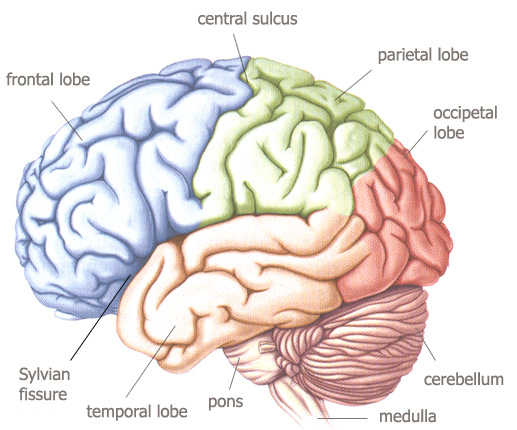
If yelling at our kids physically damages their brains (see Stop Yelling Daddy, Part 2 for details), specifically the frontal cortex where higher-order functions and “executive-creative” exist, the same is true for our brains.

Every time we were yelled at, humiliated or shamed, neurons in our frontal lobe were either killed or primed for pruning. At the same time neurons in the limbic systems developed more fully (this is the “fight or flight” part of our brain).

The other night I was thinking about my dad. He yelled a lot. He seemed to call me an asshole at every opportunity he could find. I have chosen to take responsibility for my life and let go of his poor parenting (as best I can). But his actions permanently altered my brain in a negative way.

I DO NOT WANT TO DO THIS TO MY KIDS!

For the record, my father never had a dad. He died when my father was two. So there was no positive male role model in my dad’s life, no one to help him grow up into a man.
Inadvertently, my father’s shortcomings have given me the tools to be a better dad. My childhood experiences have empowered me to avoid most of the pitfalls my dad couldn’t avoid. Even though his example was not always a good one, at least I had a dad. He gave me a “baseline” that helped me decide what kind of man and dad I wanted to be.

Don’t get me wrong, I don’t yell that much. And I don’t call my kids assholes, or other humiliating things. But I don’t want to yell at them at all. Once a week is too much in my opinion.

The other night, it suddenly dawned on me. When one (or both) of my kids has a tantrum, fails to listen, carries out an undesired action (like whacking a family member in the head with a metal car) the way my brain is wired is what causes me to react by raising my voice, getting upset and trying to control the situation.

In an instant, my unconscious reacts, and it is directly wired into my limbic “fight or flight” response.

This has been, by far, the greatest shortcoming I have had as a dad. It causes me great emotional pain because I feel I am failing my children and myself when I start to yell.

The thing I realized is, no matter how much I consciously desire changing my behavior it doesn’t really matter. Why? Because the fact is my brain is “physically wired” a certain way. So the reaction I have is not an easy thing to change. My conscious mind is not fast enough to circumvent the unconscious reaction.

I’ve heard all types of good advice like “breathe,” or “walk away.” But once my limbic system has kicked in, I sometimes forget all of this. It’s like I’m on autopilot, or having an out of body experience.

How can we expect a different reaction when we’ve been using the same neurological pathways for so many years? For starters, we need to give our subconscious a choice.

So, how do we retrain our brains? Here’s the immediate plan:

– Divert the negative energy of a situation with movement. If I’m not a stationary target, maybe I won’t feel so attacked

– Work on inserting a new reaction into my subconscious, asking the question: what is my kid trying to tell me? I’m hoping gaining insight, instead of trying to gain control might be a better choice

– This one might be the most important: remember that my kids are not trying to hassle me or give me a hard time (although it might feel like they are). They’re two & four years old, and what they’re doing is normal toddler behavior!

I’ll report back soon to share how it goes.

And remember, you are not alone…

Related links:

How To Retrain the Reactive Brain, Part 2
Stop Yelling Daddy, Part 1
Stop Yelling Daddy, Part 2


If you like this post,Stumble It!

Family Blogs
blog

Can One Dad Trade Up to a Minivan, for free?

The Great Minivan Trade Up

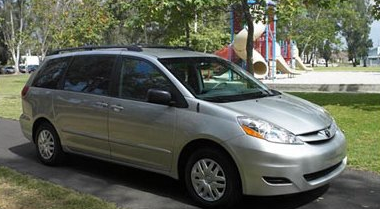
My friend, and fellow dad over at Dad of Divas is on a quest for a free minivan. Although there’s a lot of work involved, as well as the possibility of failure, he provides an excellent example of thinking outside the box and working with what you’ve got. 

“What I am offering is to try a trade up project for a new (or very gently used – preferably new) Toyota Sienna… I am looking for people to offer trade ups that have some value to others.”

Chris is looking to turn this…

Into this…

Click here for more information, to follow Chris’ progress, or to become part of this event.

Best of luck, Chris!

And remember, you are not alone…

On Parenting: An Interview with Mark Brady, Ph.D (PART 3)


Mark Brady, Ph.D., is a dad, an award-winning author, a teacher and trainer. He has taught Systematic Training for Effective Parenting (STEP) courses for the last 12 years. Mark has also written numerous articles for journals and magazines.

In Part 1 & Part 2 of our interview, Mark and I discussed emotional abuse, the impact of yelling at our kids, hitting and parental exhaustion/stress.

And now, Part 3…

DB: I do not hit my children. I think it is wrong. Do you have any insight as to why some parents think it is OK? Is it upbringing? The need for control?

MB: It’s difficult to generalize, but research suggests that parents who hit children were themselves hit by their parents.

From their perspective, they were hit and “they turned out all right.” My response to this assertion is: “Compared to what?”  How might you have turned out had your fear circuits not been intermittently triggered in ways that make the world look like a dangerous and difficult place?

Up until they acquire language — between age two and three — children are “citizens of the world.” By that, I mean, they don’t discriminate in any way. Once the fear circuitry gets overly activated, the world begins to become rigidly separated into “us and them.”

Out of this separation all wars are born.

Interestingly, in The Mindful Brain, Siegel points to research showing how fear of people different than us subsides when EF (Executive Function) improves. Improved EF allows us to “use words, not war.”

DB: How do we begin to change their opinion to help future generations become more civilized? Or is that an impossible task?

MB: It’s not an impossible task.

Essentially, Step One is realizing it’s possible for them to gain greater neural integration, and thus, greater ability to regulate their own emotions.

Step Two is then actually doing that work, which can often be painful and difficult. Joseph Campbell called such work, The Hero(ine)’s Journey. And he called it that for good reason. It’s rarely a cakewalk for those who take it on.

Step Three is reaping the benefits that come from greater neural connectivity and integration. And they are considerable (again, see Siegel’s, Mindful Brain book or Parenting From the Inside Out, or my book, A Little Book of Parenting Skills).

DB: In your opinion, if we could only get one thing right as parents, what would be at the top of the list of importance?

MB: Secure attachment. All things good stem from that.

But if we don’t have it ourselves, it’s not something that we co-create with our children as a matter of course. If we didn’t have it, it takes reading, learning and real work to earn it for ourselves, and then to be able to recreate it for our kids.

In A Little Book of Parenting Skills, you’ll notice that I have three different pieces in there on “relationship repair.” (The brain learns best with repetition and practice).

First knowing that a relationship even needs repair, then knowing the importance of repairing it, and then actually doing the WORK of repair — understanding and accepting our role in any breaks or damage, sincerely apologizing for them, and then finding out how things can be patched up — is an important part of creating secure attachment. It’s part and parcel of answering The Big Brain Question … YES!

DB: Can you elaborate a bit more on the meaning of secure attachment?

MB: Attachment is actually a formal field of study. This intro on Wikipedia will help, I think:

wikipedia.org/wiki/Attachment_theory

If I was to explain it simply it would be that a child finds comfort and ease of emotional regulation with a primary caretaker. It’s this relationship that works most powerfully and most easily to reduce adrenaline and cortisol levels in the body and brain, which results in calming and soothing.

Eventually, this ease of neurochemical regulation gets transferred from caretaker to self — thus allowing a child to begin to regulate their own emotional states, which allows for greater social and emotional growth and ease.

(Check out the story on my Web site: The Kindness of Children to read about a kid with disorganized attachment who can’t self-regulate, and what was done to help.)

Well, we’ve reached the end of the interview. I’d like to thank Mark for taking the time to share with us. I hope you have found his words as helpful and insightful as I have.

And remember, you are not alone…

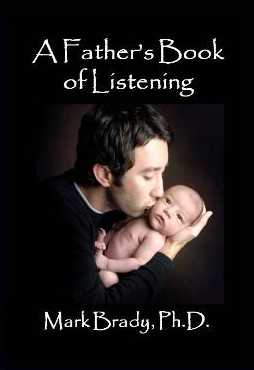
You can find many of Mark’s books, including the one pictured above, on Amazon.com, Paideia Press (414-828-6275, paideia@gmail.com), or many fine online book retailers.


Related links:
How to Retrain the Reactive Brain, Part 1
Stop Yelling Daddy, Part 1
Stop Yelling Daddy, Part 2

On Parenting: An Interview with Mark Brady, Ph.D (Part 2)

Mark Brady, Ph.D., is a dad, an award-winning author, a teacher and trainer. He has taught Systematic Training for Effective Parenting (STEP) courses for the last 12 years. Mark has also written numerous articles for journals and magazines. His latest book, A Father’s Book of Listening, is an insightful, relevant guide for the modern-day dad.

In Part 1 of our interview, Mark and I discussed emotional abuse, the impact of yelling at our kids and parental exhaustion/stress.

And now, Part 2…

Daddy Brain: Many of my readers are concerned with lack of time with kids & exhaustion. What are your thoughts on those subjects?

Mark Brady: This is a serious problem in modern life. Much more serious than people realize, particularly in the first three years of children’s lives. I’ll explain a bit about why that is below, but essentially the airline instruction for parents to put on their own oxygen mask first applies to parents on or off an airplane — both literally and figuratively! Oxygen is the fuel of brain function.

DB: What are the long-term effects of exhaustion on the brain?

MB: I find it VERY useful to think of the brain simply as an organ that processes energy and information, kind of like a computer. It’s obviously much more, and much more complex than this, but this metaphor is useful, particularly in terms of understanding where the difficulties lay that parents encounter, and then empowering them to do something about them.

So, how do we know when our computer’s malfunctioning and needs to be rebooted? Simple: we don’t feel good. We’re tired, emotionally upset or frightened in some way. A brain that’s processing energy and information effectively across all its neural network, feels good in what I call the heart-brain-mind-body.

It’s not that our kids are misbehaving, usually. It’s that our brains can’t adequately process the energy and information it’s receiving in the moment. If this condition persists long enough, we can get seriously ill. Two books that explain how this happens in great detail are Gabor Mate’s, When the Body Says No, and Bob Scaer’s, The Body Bears the Burden.

DB: What kind of damage is caused to parents when our kids are yelling at us!

MB: Parents have much greater neural connectivity in their brains than most children do, and generally can effectively handle large bursts of “energy and information” that come from children.

But not always. I’m sure many of your readers may have experienced or witnessed kids yelling at their parents and getting a rapid, reactive slap in response — a perfect example of a parent’s brain receiving more energy and information than it could handle, having their limbic system hijacked, and reacting impulsively.

In such a situation, it is the parents who have the work to do. Which is mostly the case whenever our limbic systems are hijacked — and this happens way more than many of us probably even realize. Here’s a Web site that uses LeDoux’s work to explain limbic hijacking briefly: timlebon.com/neuroscience. Google “limbic hijacking” for further explanation.

DB: Why have you chosen this niche to focus on? Why do you want to help kids and parents so badly?

MB: Much of the work in developmental neuroscience in recent years indicates that the period from five weeks in utero, through roughly age three when language is fully developed, is CRITICAL in human development. Things that happen during this period profoundly shape children’s world views.

Here’s what Bob Scaer, an MD who’s an expert in the effects of trauma, has to say about it: “The cumulative experiences of ‘life’s little traumas’ shape virtually every single aspect of existence. This accumulation of negative life experiences molds one’s personality, choices of mate, profession, clothes, appetite, pet peeves, social behaviors, posture, and most specifically, our state of physical and mental health.” 

Whether Scaer’s correct or not, doesn’t really matter. I’ve decided that if I can bring this awareness to parents — that what they do during the first three years REALLY matters, and not just for the first three years, but for all of their children’s lives — perhaps greater “energy and information” can be devoted to making those years the absolute best they can be for kids AND parents. For more information, check out: zerotothree.org.

Click here for Part 3 of  the interview.

And remember, you are not alone…

Related Links:
How to Retrain the Reactive Brain, Part 1
Stop Yelling Daddy, Part 1
Stop Yelling Daddy, Part 2

You can find many of Mark’s books, including this one, through Amazon.com, Paideia Press (414-828-6275, paideia@gmail.com), or many fine online book retailers.