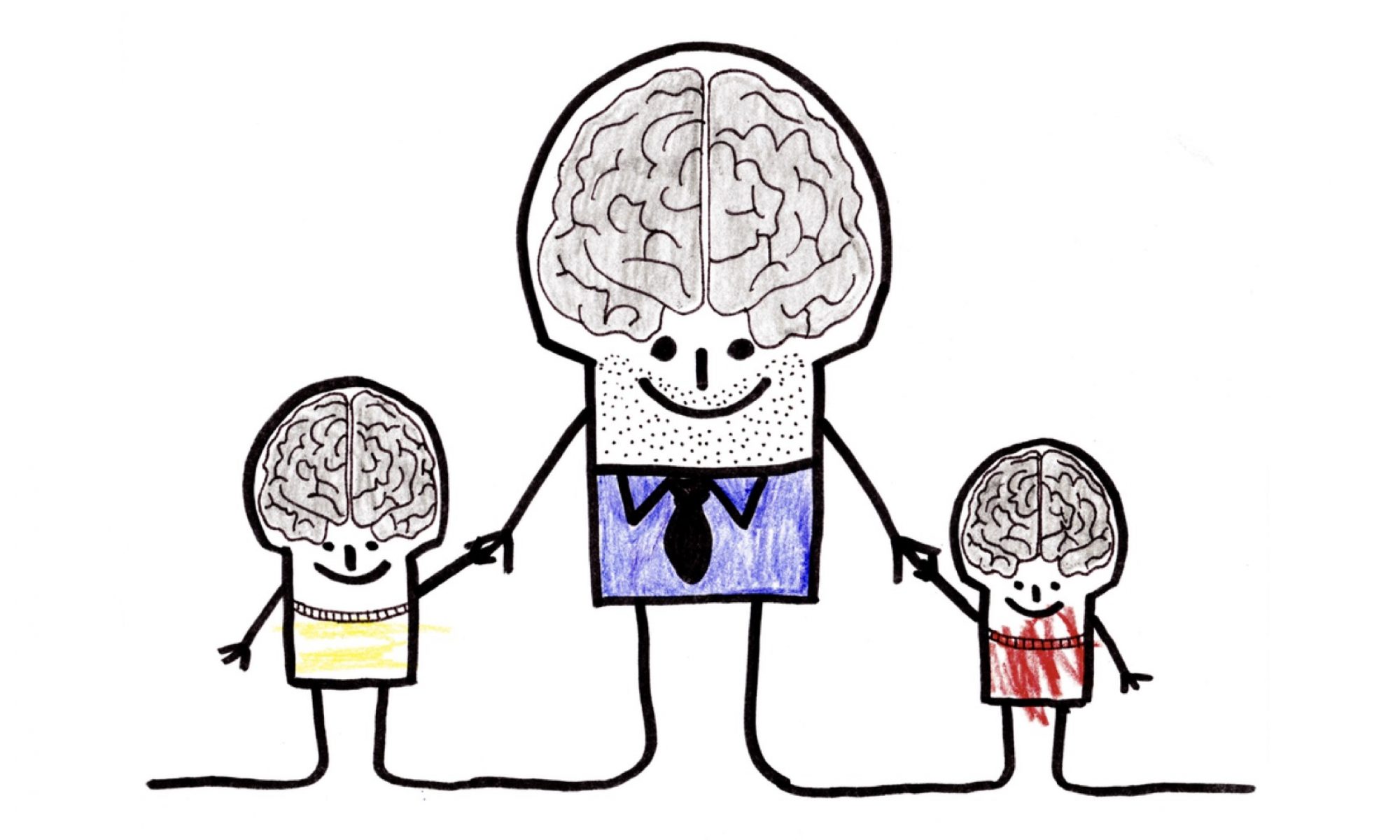
People are Dying to be Heard: an Interview with Ben Merens

Ben Merens is a professional speaker and radio host.

His radio show, At Issue with Ben Merens, is very popular because it examines a variety of topics that have relevance to our every-day lives. As a speaker, Ben’s message is gaining more and more attention because of its importance: people are dying to be heard.

Ben was kind enough to answer some questions about this topic, which should be of interest to just about anyone. No matter how good a listener you are, there’s always room for improvement. We also have a right to be heard ourselves…

Daddy Brain: Can you overview what you speak about at your seminars?

Ben Merens: I talk about the importance of listening to others because People Are Dying To Be Heard. I discuss the three levels of listening basic to all our lives: listening to ourselves; listening to those we know; and listening to strangers. I also stress the importance of living and listening in the moment. I try to help people block out the distractions in their lives that impede their ability practice “Uni-Tasking” or focused listening.

DB: Where did this topic originate?

BEN: The topic comes from my 25 years in the journalism profession. I’ve learned that people all want to tell their stories. I’ve also learned that we tend to take less time to listen to others today because we all feel so busy and hurried. I find that it is healthy to just sit still and listen to another. The benefits of listening are both for the speaker and the listener.

DB: Do you feel the need to be heard? If so, is your need being fulfilled?

BEN: Yes, I do feel the need to be heard. I think we all have this need to some extent. I feed the need daily on the radio but more so when I am giving a speech about the Art of Listening. When I am speaking from my heart to a group of people from 25 to 250, my soul is fed and I am at peace.

DB: Do you have any suggestions on how a parent can balance listening to their kids with accomplishing a task that needs our full attention – like cooking dinner? We want our kids to be heard, but at that moment it might be difficult to really pay attention. What do we tell them?

BEN: If you’re comfortable cooking and talking…go right ahead. But when the conversation needs your full attention, use the opportunity to build trust and teach your child. Teach him/her patience by telling them that you need some time to finish cooking (or whatever else it is you need to do) BUT that you’ll give them your complete attention at … and state a time here. And, then stick to it. This is where the trust comes in. As long as you stick to your promise, over time your child will be willing to wait because he/she will know that you will be available. I don’t think a parent needs to be available for their child whenever he/she calls…but we need to find a happy medium between a child’s call for attention and a parent’s ability to provide it.

DB: How do we teach our kids to respect when mommy and daddy want to talk? Other than telling them, “mommy and daddy are talking, you’ll have to wait your turn,” how else can we instill the art of respecting mom and dad’s need for communication? I would think leading by example would be a good start.

BEN: I think the same rules apply here when Mom and Dad need to talk in private. A child needs to know that sometimes Mom and Dad need time alone. And sometimes, the child will have that same opportunity with one parent. Kids get it. They will learn to be patient if they sense there is justice and fairness in the request.

DB: I remember being told to “be quiet,” often as a kid. I was a talker, still am. My need to be heard has not left me, but I sometimes feel that what I have to say might not really be important or that people just don’t want to be bothered listening to me. How would attending your seminar, or listening to your audio book help me?

BEN: I teach others how to balance their need to be heard along with the willingness to listen to others. I help people learn how to prioritize what they want to say…so they can be heard about what really matters and disciplined enough to let the less important messages be left unsaid.

DB: How do we let them know they have a right to be heard?

BEN: We let them know they have a right to be heard by listening to them. And, we also let them know that they have an obligation to listen. An easy way to teach this to kids is to point out that we have two ears and one mouth for a reason. We need to listen twice as much as we talk. It is a good rule of thumb for adults too.

DB: Dads still struggle to be heard. For too long, we’ve been trapped in a paradigm where we’re not supposed to have feelings, doubts or worries. Many of my readers are daddy bloggers who have found a voice of their own, or are struggling to find their voice. What advice do you have for dads that may not know where to look for their voice, let alone express it?

BEN: I would tell dads to start by listening to themselves. I advise people to sit still in a quiet place and think about what is important to them. If you don’t know what is important to you, it is unrealistic to expect others to hear you. But, once you have a message that you want to express, allow your passion for that message to get the attention of others. People can hear when you have something important to say and when you are just filling space. We all want to be heard, so we all have to recognize that we can’t always be the one talking. And, when we limit ourselves to voicing the truly important messages, people tend to pay close attention to us.

DB: How do we teach our community, family and friends that dads need to be heard too?

BEN: I don’t think it is a matter of segmenting out the needs of dads to be heard. I think we need to recognize that all of us need to be heard. And, just because someone tends to be quiet or not generally forthcoming in conversation, this doesn’t mean that they don’t have something important to say. Dads have feelings too. And they deserve to share them just like everybody else.

– – – –

Thank you Ben, for taking the time to answer my questions.

To learn more, feel free to visit Ben’s site at BenMerens.com. If you’re interested, his seminar is available on audio. You can also click here for more about his WPR radio show. If you have Internet service, you can listen in for free from anywhere in the world by clicking here and adding Wisconsin Public Radio’s Ideas Network to your iTunes, Windows Media Player or RealPlayer. It takes about 30 seconds to download the station. Then, just double click the downloaded icon to automatically add to your playlist.

And remember, you are not alone…

Little Acts of Love, by Paul Peterson

I came across a wonderful article at one of my favorite blogs, paulpetersonlive.com. I was so moved by Paul’s message, I felt it was important to share with you:

Last night our family took a friend of ours to Cracker Barrel for his 30th birthday. Our friend is from Honduras and speaks broken English (though he’s getting better all the time). My Spanish is limited to what I’ve picked up by watching Dora the Explorer with “The Ladies”. We have a good time together. I probably amuse him with my lame attempts to speak Spanish. I’m such a gringo.

While we were ordering, I slipped our waitress a slip of paper that said, “My friend had a birthday. Let’s go crazy!” They did! After dinner they brought him some peach cobbler and sang a rousing and VERY loud “Happy Birthday!”

I watched my friend. His eyes were wide with multiple emotions ranging from fear to amazement. When they were done and left he looked down at his cobbler for a long time. I saw him biting his lip. I was biting mine too. So was Sherri.

We sat with tears in our eyes. Silent. Hesitant to talk for fear we start bawling.

After a few minutes my friend looked at me and said, “No one has ever sang ‘Happy Birthday’ to me.” He went on to say that this year even some of his closest family has not called and wished him a “Happy Birthday.” He said, “I will remember this day for 50 or 60 years.”

I have thought much about this experience. What is it about a little thing (an evening, a dinner, a song) that can make adults cry and create a memory that will never be forgotten?

Here’s what I’m thinking, we know we are to love one another. Often we look for the BIG ways to show our love, and because we can’t find or afford the BIG ways we put our love on hold. We live with the knowledge that we should… but we don’t. Consequently we live unfulfilled Christian lives.

MAYBE we should stop waiting for the BIG and start doing the little, and in doing so we may just find that LITTLE is big.

What LITTLE thing can you do for someone today to show them you love them?

Remember this, what may seem “little” to you may be HUGE to someone else! Go for it!

And remember, you are not alone…

Buyer Beware – My Hewlett-Packard went on Fire!

What would you do if your laptop went on fire? Would you consider this normal?

Well, Hewlett-Packard couldn’t even muster up an apology, let alone common courtesy when I called them for help.

Extremely frustrated, I wrote a letter to the president of the company, hoping there would be more integrity and customer care at the top. That was three weeks ago. I have received no response.

My follow up call to the HP home office was answered by people who barely spoke coherent english. And aparently they received the same training as their coworkers in the customer service department – bad or none.

This is the letter, reprinted in full:

Mr. Mark V. Hurd, CEO
cc: Ms. Catherine A. Lesjak, CFO
cc: Mr. Randall D. Mott, CIO

Hewlett-Packard Company
3000 Hanover Street
Palo Alto, CA 94304

Dear Mr. Hurd:

I am writing to you because I am extremely dissatisfied with the way I was treated by HP’s customer service department. My Customer Number is 7501131298.

In 2002, I had purchased an HP Pavilion ZT1135 computer that recently went on fire. When I called HP to discuss what happened, I was first told that I was out of the warranty window and that I couldn’t be helped. I explained that this was not a normal wear and tear issue, and that regardless of the warranty the computer should not go on fire – under any circumstances.

I was on the phone multiple times with HP for total of over 2-hours. With each frustrating phone call, I had to repeat exactly what the problem was over and over to different customer service reps and case managers. I will detail it here so you can understand the circumstances:

The problem is that internal monitor cable that connects the screen to the motherboard went on fire. A flame, approximately 3” in height, came out of the computer right next to the on/off button. The hard drive, motherboard, etc, still work. But since the video cable burned through, the backlight / inverter is not getting any power so it won’t power the light behind the screen. It’s also possible that the inverter was damaged by this incident.

The monitor still works. Using a flashlight I was able to illuminate the screen and see that it does still power on and work just fine. It is quite easy to see the damaged video cable. There’s a long, thin panel that flips up just above the keyboard, which allows one to look inside.

A case manager did finally agree to take the machine in for review. A few days later he called me back and told me his technician said my monitor had died! The technician made no mention of the fire, or the visually damaged video cable. He just said the monitor had stopped working! I am not a computer guy, but even I can see that the monitor is working fine and that the video cable is burned through. Why weren’t the problems I reported addressed?

I was also told that I was using a third party A/C adaptor, which is true. The one that came with the computer stopped working (and at some point was actually recalled by HP). This is what Best Buy gave me as a suitable replacement (I had an extended warranty with them).

Here’s the thing: the A/C adaptor didn’t go on fire, nor did the motherboard. I was plugged into a surge protector and the A/C adaptor still works! So I’m not sure why the technician would mention this, but fail to mention the burned through video cable. I have to question if he even looked at the video cable!

So the computer was sent back to me, unrepaired. At the time of purchase I paid over $1,600 for this laptop. Needless to say I am very disappointed in the customer care I received.

At the very least, I wanted you to know what happened. As the president and CEO of the company, I’m sure you don’t want customers to feel mistreated – especially when an incident like this happens. My wife was using the computer when it went on fire. She could have been hurt. My son could have been hurt, or my home could have gone on fire.

My impression was that HP was an excellent company with stellar integrity & customer service.

I did not even receive an apology for my computer going on fire!

Instead I felt as if I were on trial, answering the same questions countless times – as if I were being interrogated as a suspect who had committed a crime. How is that customer service?

I would truly appreciate if HP could repair my laptop, or send something comparable as a replacement. As long as my family has a machine that works, I’ll be happy.

If you have any questions, or need further information, please feel free to call me anytime.

– – – – – – – –

Yes, my laptop is old. But that doesn’t mean HP’s integrity should expire.

And remember, you ar not alone…

100 Best Blogs for Healthy Parents

Online Nursing Programs has compiled an extensive list for moms and dads. Although they’re a resource for the nursing profession, they’ve started a blog that caters to parents and general health. 

100 Best Blogs for Healthy Parents covers a variety of topics, making it a good resource. I’m honored to say that Daddy Brain was included in the list as one of the best dad blogs!

I’m reprinting the remainder of their “best dads list,” here. Click through to their site for links to nutrition & healthy living, blogs for moms, parenting advice and more…

Best Dad Blogs
Pacing the Panic Room. Ryan is a devoted husband and dad who shares the adventures of his unique family in his popular blog.

Men’s Health. From Blisstree, this blog features men’s health topics such as snoring, traumatic brain injuries, and male contraception.

An Ultra Runner’s Blog. This dad is also a runner and writes about staying fit and healthy.

Daddy Brain. This dad shares tips and advice on being a great parent.

MH Today. Read stories related to men’s health on topics such as exercise, the link between obesity and the brain, and yoga for relieving back pain.

Working Out the Details. This Men’s Health blog is all about fitness and working out.

A Family Runs Through It. A stay-at-home dad who homeschools, this blogger lovingly shares his family’s experiences.

Perfect Shave Dispatch. This blogger is fanatical about wet shaving and offers tips, products, advice, and more on how to get the perfect shave.

Balding Blog. If Dad is losing his hair, then read about hair loss and hair restoration from the doctors who blog here.

Childsplayx2. This involved dad writes about family life, fathers’ image when it comes to parenting, and much more.

 And remember, you are not alone…

Can a Smile Transform Your Life?

I’ve seen this commercial a few times now, and every time I see it I wonder:

Why can’t I be more like this dad? Why don’t I smile more?

Look, I know the guy is probably an actor, but it’s a valid question. Most days I find myself struggling in some way. Issues like exhaustion, finances, work, my family’s health, and isolation have a way of taking their toll. We all have our own struggles, but I am tired of mine all to often defining how I act – especially because how I’m acting is not true to who I am.

I have been stuck in reacting vs. responding for far too long.

No matter what the situation – is fretting, stressing or lamenting going to fix anything? Or make it worse? I’m determined to adopt this habit of smiling (and enjoying life more) into my existence.

In many ways, I’m setting a good example for my boys. But I have room for improvement on this one.

And remember, you are not alone…

Being Grateful, Even When You’re Down

Picture 6Sometimes the struggles of the day weigh me down.


From the time I leave the house until the time I get home I feel so isolated. My goals, so clearly defined, seem so far away from accomplishment — leaving me feeling like they may never manifest.

It’s important to remember that these are just feelings. Whether it is truth or not is up to me.

So it’s time to remind myself what I’m grateful for — to shift my focus off what I don’t have, to what I have been blessed with.

I am grateful for:
– My two healthy boys, Max & Joss, who love me even though I’m not perfect
– My beautiful wife, Kara, who believes in me even when I perceive things as hopeless
– Having a job to support my family
– My family in NY, including the handful of friends that have become brothers & sisters
– My home
– Grandma Frances
– Paul Chang
– The CD player in my car, which allows my 1.5 hour daily commute to be enlightening
– Bagels and Dunkin’ Donuts French vanilla coffee
– My boss
– The ability to run 3-miles and feel good (mentally and physically)
– Hope. For without it there would be no chance for improvement
– The gift that the Universe has given me to write and express myself
– My wife’s Italian wedding soup
– My cat
– My Moleskin notebook
– Ghostbusters (the original)
Zig Ziglar
– The Sedona Method
– Slim-cut shirts and jeans
– My blog
– My laptop
– Honets Tea
– Depeche Mode

What are you grateful for? Do you let the important people in your life know how you feel?

I’ll never forget something Muhammad Ali once said, “what you are thinking about, you are becoming.” I’m doing my best to let go of my negative feelings. The more I think negative, the more it will creep into my reality.

Screw that! I’m thinking positive.

And remember, you are not alone…

A Fresh Look at Goals: for Parents, Kids & the Family (Part 2)

In Part 1 of this series, I wrote about methods that help us define and develop goals.

Once you’ve clarified what they are, the next step is breaking each goal into down into manageable steps, so we can set out with a plan on how to accomplish them. This plan may need frequent adjusting. This is not only OK, but a healthy part of the process.

As we move along and things clarify, we sometimes find that part of a plan simply does not work. This is NOT to be considered failure, it is a mini-success because with the adjustment in our plan we align ourselves more closely with the end goal.

Ultimately, if we take steps on a daily basis (no matter how small) we can attain our goals. It’s important to remember that we may not reach our goals on the intended date. Some things are out of our control. And if you’re a parent, lack of time and energy are real obstacles that may hinder rapid accomplishment. Fear not, it’s still possible, as long as you become crystal clear about what you want and how you’re going to get it.

The good news is that if we do this ourselves, we wind up teaching our kids how to do it, too. It’s a winning situation for everybody.

Here’s snapshot of what my mentor, Zig Ziglar, says about the goals process. His fantastic book, See You At The Top, goes into great detail about this subject (see a full list of recommendations at the end of this article).

1)     Identify EXACTLY what I desire
2)     Spell out exactly why I’d like to reach these goals
3)     List the obstacles I need to overcome in order to get there
4)     Identify the people, groups and organizations I need to work with to get there
5)     Identify what I need to know (learn) in order to reach these goals
6)     Develop a plan of action
7)     Set a date on it. When do I expect to get there?

One additional thought. If this all seems overwhelming, that’s normal. You can’t possibly answer all of these questions all at once. If you’re just starting the process, you may not be able to answer any. But if you allow yourself to believe that you can do this, you will. If you believe that you can’t, you won’t. In other words, your perception will create your reality.

SPEAKING OF KIDS
It’s never too soon to help our kids learn to set their own goals. By this I do not mean us setting goals for them, that’s different (and also necessary).

For instance, my son Max is in kindergarten. I shouldn’t expect him to be able to answer the following: “So, what are your plans to get to college?”

But I can help him set some goals for the coming school year. Any extra-curricular activities he might want to partake in (ie: swimming or track and field…) I also like to discuss future goals with both him – from career to family plans. I do this with my 3-year old, too. It helps my boys develop their frontal lobe, which is so important in decision making and problem solving.

There are too many young adults that have not idea how to set a goal, or what to do with their lives.

OUR GOALS
I’d like to take a deeper look at the kindergarten to college analogy. ANYBODY who tried to look at this scenario as a point A to point B endeavor would be completely overwhelmed. Here’s a way it can be broken down:

Kindergarten (where I’m at) to College (the goal)
the step-by-step approach to accomplishing my goal:

– Section it off by grammar school, middle school, high school and college.
– Now break it down by grade (year): kindergarten, grade 1, etc.
– By semester
– By month
– By week
– By day
– By class

You get the idea. Each step leads us to the ultimate goal, but it’s much easier to build upon if you start from the “by class” goal. Now it’s manageable – a small enough bite that you can actually chew on it, instead of choke on it.

FAMILY GOALS
Family goals could be anything from spending more time together, taking a family vacation, helping each other get in shape, fixing up the house, etc…

Sometimes an individual’s goal becomes a family goal. For instance, my son Max wants to be a NASCAR driver.

This is his goal. But since he’s only 5, it’s my job (and my wife’s job) to help him attain it – making it a family goal.

My first step is bringing him to a kart race to gauge his interest level. Once he sees exactly what kids’ kart racing entails (this actually exists for kids his age), what does he think?

My responsibility is to help both boys set goals that are realistic and attainable (but not necessarily easy). I can’t expect Max to drive a full-sized car right now, but there are karts he can drive, or he can play a driving game on the Playstation, etc…

If we make goal setting a way of life for ourselves and our kids, we can all expect more fulfilling and less frustrating lives.

Is it easy? NO.

Have I accomplished everything? Hardly.

Is it worth it? Absolutely.

It’s a long road, but the sooner we get on the better off we’ll be.

And remember, you are not alone…

For further reading & listening:

Zig Ziglar
– See You at The Top (Highly reccomended book)
– Goals (audio CD’s)

Jack Canfield
The Success Principles
(also available on audio CD)

Brian Tracy

A Fresh Look at Goals: for Parents, Kids & the Family

Back to school doesn’t have to mean back to the same old daily grind.

This is true whether you’re a kid or an adult. Fall is the start of a new season, and with it comes opportunity.

You might be wondering – opportunity for what Daddy Brain? Raking up the leaves?

Nope. It’s an opportunity to take a fresh look at goals ­­– for ourselves, our kids and our family.

Gaining a clear picture of our goals is a huge step in attaining them. If we can “see them,” then we can move toward them. Think about it as if you were driving cross-country in your car. It’s the middle of the night. There are no street lights. No headlights. Not even a dashboard light (hey, this is starting to sound like a Meatloaf song).

Tough, right? How can we reach our destination, let alone see ten feet ahead of us, under these circumstances? I think you’ll agree it’s much easier to see with headlights. Now add a GPS and you’ve got both short term goals (headlights) working in tandem with long-term goals (the GPS), all focused on that final destination.

Very powerful.

It’s the same with goals. We can’t truly begin the journey until we can see where we’re going (which makes clearly defining our goals an important goal in and of itself). Depending on where you are in life, this could take some time.

According to Jack Canfield, “one of the easiest ways to begin clarifying what you truly want is to make a list of 30 things you want to do, 30 things you want to have, and 30 things you want to be before you die.”

Brian Tracy puts it this way:
“Imagine that 5-years from now your whole life has been made perfect in every respect. Every aspect of your life. All your dreams have been fulfilled; every goal has been achieved. What would it look like if 5-years from now your life was ideal in every way?

Where would you be in five years?

Who would you be with?

What would you be doing?

How well would you be doing it?

How much would you be earning?

What kind of home would you live in?

What would be your level of physical fitness?

What would your family be like and your relationships?

How would your children be doing?

If your life were perfect 5-years form now in every respect – what would it look like?”

He goes on to raise more questions before he mentions that the 5-years are going to pass. No matter what. “And if you’re crystal clear about what your life is going to be like in 5-years, your chances of making that a reality go up about 1,000%.”

In Part 2 of this series, we’ll examine what to do with these goals once we’ve defined them. How to take our goals, set a plan of action and attain them? We’ll also take a look at family goals &  how to teach goal setting & accomplishment to our kids.

And remember, you are not alone…

Related links:
A Fresh Look at Goals: for Parents, Kids and the Family, Part 2

For further reading & listening:
The Daddy Brain Book Guide (has many recommendations on the subject of goals)

Zig Ziglar
– See You at The Top (Highly reccomended book)
– Goals (audio CD’s)

Jack Canfield
The Success Principles
(also available on audio CD)

Brian Tracy

The Golden Rule: Treat Others As You Would Like To Be Treated

There’s something I needed to be reminded of today:

Treat others as you would like to be treated.

Simple? Yes. Easy to do? Not always. But the rule holds true whether we’re dealing with our spouse, our kids or our coworkers.

Sometimes it’s hard…
…like when we get caught up in trying to accomplish a short-term goal (a manager looking to “save” money by not giving a valued employee a raise), we sacrifice the long-term (his/her productivity goes down costing the company much more than the aforementioned raise).

Quite often it’s a matter of letting go of the need to control a child’s actions, a spouse’s health, keeping your company in the black, etc.

If we’re having the need for control, it’s easy to get frustrated when things don’t go exactly as we’d like. This often results in lashing out towards the very people we want to help the most. When this happens, we could be pushing that person (or situation) in the complete opposite direction of our desire.

But if we put ourselves in the other person’s shoes and try to get an understanding on THEIR POSITION, we just might be able to offer an empathetic ear and give them the support they really need instead of trying to control them.

Something Jack Canfield, speaker & co-author of the Chicken Soup for the Soul series, said has stuck with me:

“High intention, low attachment.”

I think this is great advice. But how do we have low attachment to someone’s health or our future? I think part of the answer is that “low attachment,” does not mean not caring. It’s more about letting go of anxiety and the need to control.

This is something I struggle with every day.

And remember, you are not alone…

Get Motivated by Successful Failures (Part 1)

Picture 1Some of America’s greatest success stories almost didn’t happen.

Did you know that Michael Jordan was cut from his high school basketball team? Following this rejection he went home, locked himself in his room and cried.

Walt Disney was fired from a newspaper for having no imagination and no original ideas.

Even The Beatles failed. Before they became “popular,” they were turned down by Decca Records who claimed, “we don’t like their sound, and guitar music is on the way out.”

One of Thomas Edison’s teachers told him he was “too stupid to learn anything, and that he should go into a field where he might succeed by virtue of his pleasant personality.”

What would have happened if these people would have listened to the criticism?

Whether the criticism spurred them to greatness or not, one thing is for sure: the deciding factor in their success was not their talent. It was their ability to get back on their feet – sometimes countless times and try again.

You can do the same.
How? By learning each lesson you need to learn from your “failures,” and trying again – as many times as it takes. Do the work that needs to be done, as best you can each day. No matter how daunting. Step-by-step, day-by-day, you will get closer to your goal until it is attained.

These successful failures are perfect examples that anything is possible.

Do you listen to the critics? Are you your OWN worst critic? If so, you may be denying the world your greatness. Not to mention your family, yourself and your bank account.

You do not have to settle for less than who you are. No matter what ANYBODY says.

If Jordan had settled for less, the Knicks might have actually won a title. Scotty Pippen would have had to score a LOT more points to create the Bulls legacy. And Dennis Rodman would have fallen into obscurity instead of becoming the greatest (and weirdest) rebounder in the league.

What if Edison would have listened? We might all still be sitting in the dark.

Whether you succeed or fail is up to you. It’s your responsibility. What do you choose?

Don’t forget, your kids are watching.

And remember, you are not alone…

Related Links:
Get Motivated by Successful Failures, Part 2

Family Blogs
blog