A Conversation of Biblical Proportions

Picture 1Join myself and Pastor Paul Peterson @ paulpetersonlive.com for our ongoing conversation about The Bible.

It’s an interesting combination of ignorance (mine) and expert-level knowledge (his) as I ask some pretty pointed questions.

Paul is a really good guy, as well as a dedicated family man and church leader. I highly recommend his blog!

And remember, you are not alone…

Do You Suffer from “Convenience Integrity?”

One Saturday morning, I was running errands with my son, Joss, when a strange thing happened.

I found integrity at Home Depot.

No, it wasn’t in one of the employees (who are surprisingly helpful at my local store), nor was it in the store itself.

On our quest for flowers for mommy and some water-softener, I found integrity in myself.

For those of you who aren’t familiar with water-softener salt, it’s something that helps keep your water softener cleaned out and working well so your water isn’t “hard.” Hard water is akin to taking a shower in liquid sandpaper – which is perfect if you’re trying to exfoliate.

When you buy the 40 lb. bag (geez!) of salt, you need to tell the cashier to ring it up, then load it into your cart on your way out (large piles of it sit conveniently by the exit). I asked for two bags, swiped my debit card, and got the salt.

When I got home I looked at the receipt. The cashier had not rung up the salt, which cost about $16.

I was faced with a decision. Nobody knew but me. I could have the salt free of charge. But just because nobody knew, didn’t make it right. Even though it was not intentional, and the huge corporation that is Home Depot would never miss my $16, it still felt wrong in my gut.

Then I realized, this situation had the potential to build up my integrity, or chip away at it.

Here’s the thing: (1) the nagging feeling in my gut wasn’t going to go away; (2) and not paying could cost me far more than $16, because it would have undermined how I felt about myself. Not a good recipe for success.

What kind of man was I?

I had to choose whether I was the guy who did the right thing, or the guy who ignored my integrity to save a few bucks. So I went back and paid for the salt (it did take me a few days to get back to the store).

This experience also gave me an opportunity to set a good example for my son, Max, who was with me this time. I explained to him what had happened and why I made the decision I made. This made the cost of those two 40 lb. bags worth their weight in gold.

But wait.
Before you start thinking I’m acting all high and mighty about this, I’ll admit there have been times where my integrity has wavered. And although it’s always over small stuff, I find myself wondering –
 how much integrity is enough?

Is burning an occasional CD from the library really “small stuff,” in the cosmic scheme of things? When compared to murder, stealing and infidelity, I’d have to say yes. Does that make it right, acceptable, or just plain rationalized? I think we all have a sliding scale of what seems like a breech of integrity and what does not. But where do we draw the line?

And remember you are not alone…

Superficial vs. Substance: the Swimming Analogy

Picture 2

It’s not how big a splash you make in life – it’s how well you swim, how strong you are and how many laps you can endure.

The splash is over in two seconds. Afterward, you either sink or swim…”

The good news is that we are not stuck with our current “swimming ability.” We can improve, as long as we’re willing to do the work.

And remember, you are not alone…

Life is Like a Tinfoil Ball…

IMG_0445-BI’ve got a silly story to share about something I do at work. Well, at least it might seem silly.

I have been making a tinfoil ball out of the foil I wrap my bagels in. Let me tell you, that ball started off small. But as time went on it grew in stature, ever so slightly, day by day.

Goals are the same way. If you try and “build the ball” all at once, it could easily be overwhelming — not to mention near impossible when we’re talking about larger life goals. If we try and tackle too much, we might get tangled up in all the tinfoil.

IMG_0443-BBut if you take it one layer at a time, one step at a time, over time you can build something magnificent.

And remember, you are not alone…

If you like this post, Stumble It!

The Speeding Ticket

A few weeks ago, I received a speeding ticket while traveling to work. 

Picture from http://www.herbiemania.com/

I was running late because one of my boys was up all night, so I was severely dragging my butt.

I had no intention of speeding. But my fatigue, coupled with listening to a Zig Ziglar audio book, created less than optimal conditions for me to pay attention to the speedometer.

I was clocked at 71 mph in a 55 mph zone. Doh!

You might be wondering, “What’s your point, Joey? People get speeding tickets every day.” Which is true, but the incident became a milestone moment for me — it became a lesson in integrity. Both seeing it in someone else, as well as showing some of my own.

When the policeman gave me my ticket, he did a great job. He was courteous, informative, knowledgeable and professional. He made the experience almost pleasant (except for the hefty fine and license points). Not what I expected.

As he handed me a ticket, I decided to thank him for his kindness. This was not a tactic to have him rip up the ticket; I knew that wasn’t happening. I was sincere. I wanted to give this man, who could have easily been a rude turd, some positive feedback on a job well done.

After I drove away, at a legal speed on cruise control, I realized the import of what had just happened.

I had made no excuses. The incident was my fault and I took full responsibility for my actions. I didn’t blame my son for his sleepless night. I held myself accountable and exercised some integrity (in a surprising way). Since the ticket, not once have I thought (or said), “that jerk, why’d he give me a ticket? Moron!” No, he was doing his job and holding me accountable for my actions.

The real point of the story has nothing to do with me. It’s about all of us. It’s about the choices we make, how they shape us and what kind of example we set for our kids.

If we can turn a speeding ticket into a positive experience, brimming with integrity, imagine what we can do with the rest of our lives. Whether you know it or not, your integrity is there. It’s just a question of if you’re listening when it speaks.

And remember, you are not alone…

If you like this post, Stumble It!

Spare the Rod: Don’t Hit! (Part 3)

In this final installment of my discipline and The Bible series, I’d like to ask the following question:

Could you imagine if we only did what our forefathers (and foremothers) did?

Just because our forefathers did things a certain way does not make it the best way, or the right way. If we only did what our predecessors did, we would have no plumbing, electricity, cars, TVs, cell phones, computers, indoor toilets or eye glasses. Slavery would still be legal, women wouldn’t be allowed to vote, and we’d still believe the world was flat — you get the point.

There was a time when builders stuffed walls with asbestos as insulation. Then, someone discovered (I’m paraphrasing), “wait, that’s bad stuff! It’s making people sick and it could kill you!” So we stopped using it. Until the 1970’s lead was in paint, that ‘s just how it was. Then one day someone realized it was bad, especially if kids ate it, and we stopped using lead paint.

What if we’d just kept using these things? Wouldn’t that be stupid, especially once we learned they were unhealthy choices?

Then why, in the name of God (no pun intended), do some people still hit their kids when there’s so much evidence that it’s harmful? (Click here for evidence, and here, and here.)

Times change, things change. We learn and adjust.

Yet some people insist on being literal about what The Bible says concerning discipline, instead of putting it in a modern-day context.

Here’s what I don’t understand. Why do these people take Proverbs’ words on discipline literally, while “overlooking” other things in the Bible they could take literally — like Solomon having 700 wives? I doubt there are many women out there that would be OK with their husbands having one extra wife, let alone 699!

So it’s OK to beat your kids, but not have 700 wives. Hmmm. Sounds like picking and choosing what’s convenient to me.

Simply heeding the word of the Bible when it comes to discipline is the easy way out. It’s time to stop the literal translation and take responsibility for our actions and our children’s future.

The last I heard, “turn the other cheek,” was not an invitation to take another whack of the paddle on the OTHER butt cheek.

If you haven’t already read them, here are links to Part 1 (quotes from The Bible, plus modern opinions) and Part 2 (which questions if the word of God is being misinterpreted). 

And remember, you are not alone…

If you like this post, Stumble It!

Related Links:
– Spare The Rod: Don’t Hit (Part 1)
– Spare the Rod: Don’t Hit (Part 2) 
– Never Hit a Child
– Equal Rights for Kids: Don’t Hit (Part 1)
– Equal Rights for Kids: Don’t Hit (Part 2)
– Equal Rights for Kids: Let Your Kids Decide 

Spare The Rod: Don’t Hit! (Part 2)

If the Old Testament of The Bible was written 6,000 years ago, then people who take it literally may be taking the word of God out of context. The meaning of words and concepts have changed drastically over the past 60 centuries, which leaves lots of room for misinterpretation.

Shoot the Ball!
For instance, take the example of a cowboy, a gunslinger from the Wild West. Put him on a basketball court, hand him a ball and tell him, “shoot the ball, shoot the ball!” What’s he going to do? He’s going to take the ball, drop it, and shoot it with his gun.

What you’re trying to tell him is to shoot the ball at the basket.

“The what?” He says.

“The hoop,” you tell him as you point to it.

“The who?” He replies.

Obviously his interpretation of your words is very different from what you meant. As the ball deflates you wonder, will anybody notice the bullet hole in the parquet floor?

The Question
When the Bible says not to spare the rod on a child, maybe it just means, “make certain you discipline your kids.”

Or, maybe hitting was the only form of discipline they had 6,000 years ago. If this was the case, then God might have simply been speaking to his people in terms they understood at the time.

For Another Theory…
…on why the rod is such a prevalent form of discipline in Proverbs, let’s take a look at the scribe who wrote down God’s word. Maybe his only form of known discipline was hitting. If he had the CRAP beat out of him as a kid, he’s going to filter the Word of God through his own life experience. What else is he going to say? “Give your kids a time out and use positive and negative consequences as an effective tool of discipline?”

NO! He had the crap beat out of him! He’s going to tell you to beat the crap out of your kids.

More to come on this subject soon. Until then, don’t hit!

And remember, you are not alone…

If you like this post, Stumble It!

Related Links:

– Spare The Rod: Don’t Hit (Part 1)
– Spare the Rod, Don’t Hit (Part 3)
– Never Hit a Child
– Equal Rights for Kids: Don’t Hit (Part 1)
– Equal Rights for Kids: Don’t Hit (Part 2)
– Equal Rights for Kids: Let Your Kids Decide

Spare the Rod: Don’t Hit!

I am far from an expert on the Bible, but over the past few weeks I’ve been learning quite a bit.

In Matthew 7:12 it says: “do unto others as you would have others do unto you.”

The question is: how is this being accomplished when we spank a child? Does anybody really want to be spanked? Yes I know, some people like to be spanked. Hey, some people like to roll around in broken glass (like Iggy Pop), but that doesn’t mean it’s a good punishment for our kids! I know I’d rather be spoken to about a problem than beaten over it.

I got to wondering, does the Bible really say that if I love my child, I need to “rod” him when he misbehaves? Does it REALLY say this?

So I did some research, and here’s what I found in the Old Testament:

“He who spares the rod hates his son. But he who loves him is diligent to discipline him.” — Proverbs, Chapter 13, Verse 24

“Folly is bound up in the heart of a child. But the rod of discipline drives it far from him.” — Proverbs, Chapter 22, verse 15

“Thou shalt beat him with the rod, and shall deliver his soul from hell.” — Proverbs, Chapter 23, verse 14

“Do not withhold discipline from a child. If you beat him with a rod, he will not die.” — Proverbs, Chapter 23, verse 13

This section of the Bible could have easily been called Corporal Punishment 101.

In A.J. Jacobs fantastic book, The Year of Living Biblically, he attempts to follow the “letter of the law” in Proverbs.

Unable to convince himself to buy an actual rod or paddle to discipline his son with, the author buys a “spongy Nerf bat.” On the surface it’s a comical moment, but if you dig a little deeper it’s not funny at all.

“After dinner he (his son Jasper) grabs a handful of nickels off the dresser and chucks them across the room. So I take the Nerf bat and smack Jasper’s butt with it. I’ve never spanked him before, despite several temptations to do otherwise. When I swing my bat, even though it’s spongy and harmless, I break some sort of barrier — I have now punished my son physically.

It’s an unsettling feeling. It drives home just how lopsided the relationship is. Parents have God-like physical dominance over their kids, at least when those kids have yet to reach puberty. Jasper seems undisturbed by all this. He responds by laughing hysterically, grabbing his wiffle bat, and attempting to smack me back.

So I’m basically sanctioning violence here. The rod is a fiasco. But here’s the thing, I agree with the gist of Proverbs. I need to discipline my son more. I need to give Jasper some tough love, dispense more timeouts, or risk having him turn into a three-foot tall monster…I’ve got to get stricter…”

I agree with Jacobs. It’s not about copping out of dispensing discipline, it’s about dispensing the best kind of discipline.

Jacobs’ problem is that he’s been incapable of following through on ANY form of discipline (not good for anybody involved). This is made obvious by the way his son reacts to being “struck” by the Nerf bat.

Jasper had no fear. Why? Because he fully trusts that his father has no intention to cause him hurt or pain. That’s a good thing. On the other hand, with no effective form of discipline Jasper has no respect for his father’s word. In turn, there’s never a realistic consequence for his actions, so he does what he wants. Not good.

Now exchange the Nerf bat with an actual rod, coupled with intent to “discipline,” and suddenly fear enters the picture. In this case, Jasper will probably stop the unwanted behavior because there’s a real consequence — but what has he learned?

The truth is, kids can be reasoned with. I’ve experienced it first hand. Zig Ziglar, one of my mentors, says, “people often act as you treat them.” Treat a child like they are capable of reasoning, of understanding, and they will be — especially if you nurture that.

Nurture them to a higher place. Not to a base level of fear. Stopping an action through fear does not teach virtue or ethical lessons. It teaches kids to distrust. Is that what you want for your kids? To go through life without real trust? What kind of relationships will they have with people? Their spouse and their kids? How will they perceive themselves?

In his book, A Little Book of Parenting SkillsMark Brady, PhD., explains:
“A parent’s role fulfills a sacred trust: one intended to safely help grow the heart, mind, brain and body of a vulnerable human being. No matter what you think, or what your own parents did that made you ‘turn out alright,’ hitting children violates that sacred trust.

Modern brain imaging studies clearly show that hitting children disrupts and disorganizes the developing structures of the body and brain. The home that used to be a safe refuge, no longer is. The people who used to be the ones a child could turn to for safety, no longer are. With nowhere safe to go, and no one available to turn to for soothing and help in regulating emotional distress, the world becomes an overwhelming, confusing, unmanageable place.”

My kids are two & four. They understand plenty good when I reason with them, or speak with them about the positive and negative consequences associated with their actions. The key, and the hard part, is keeping my word and following through with whatever consequence I dish out.

In Part 2 of this series I’ll consider the possibility that, if only taken literally, the Bible may be misinterpreted because the word of God is out of context. 6000 years have passed since the Old Testament was written. The meaning of words and concepts has changed drastically over 60 centuries.

And remember, you are not alone…

If you like this post, Stumble It!

Related Links:
Spare the Rod: Don’t Hit (Part 2)
Spare the Rod, Don’t Hit (Part 3)
Never Hit a Child
Equal Rights for Kids: Don’t Hit (Part 1)
Equal Rights for Kids: Don’t Hit (Part 2)
Equal Rights for Kids: Let Your Kids Decide
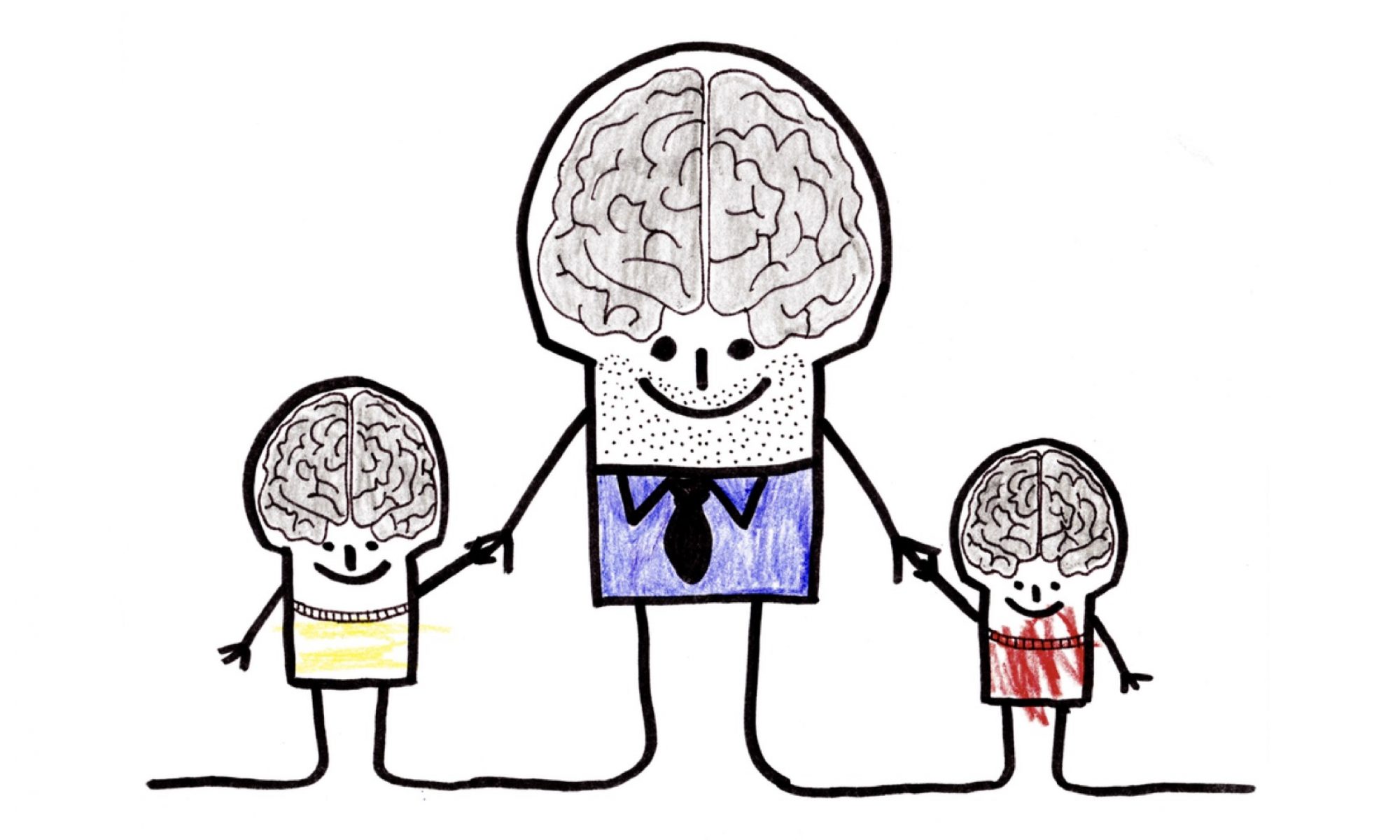

The Daddy Brain Book Guide: Resources & Reccomendations


Picture 7

This resource guide is designed for both dads and moms. As I put together the list, I realized that most of my sources were not “parenting books.” Rather, they’re books and audio books (perfect for people with long commutes) about all facets of life that have either affirmed or influenced me — as a parent, a husband and a spiritual being. Some help me develop philosophies on how to treat my children, while others enlighten me about what to teach them. Everything is linked to Amazon, so you can learn more about each book… 

PARENTING
Books by Dr. Mark Brady, PhD:
– A Little Book of Parenting Skills
– Right Listening (formerly A Father’s Book of Listening)
– The 40-Year-Old Version: Humoirs of a Divorced Dad,
by Joel Schwartzberg

– – – –

SPIRITUALITY
– Conversations with God, by Neil Donald Walsch
– Good Book, by David Plotz
– Spirit Healing: How to Make Your Life Work, by Mary Dean Atwood
– Eagle Vision: Return of the Hoop, by Ed McGaa, Eagle Man
– The Year of Living Biblically, by A.J. Jacobs
(I highly recommend the unabridged audio book)
– Zen and the Art of Poker, by Larry W. Phillips
(you must understand the game of poker to get the most from this book)
– Zen in the Art of Climbing Mountains, by Neville Shulman
(no mountain climbing experience necessary)

– – – –  

INSPIRATION, MOTIVATION, GOALS
– Tribes, by Seth Godin
– Zen in the Art of Climbing Mountains, by Neville Shulman
– Who Moved My Cheese? by Spencer Johnson, M.D. 

Books and Audio Books by Zig Ziglar:

Books
– See You at The Top (definitely read this one first)
– Over The Top
– Zig: The Autobiography of Zig Ziglar

Audio Books
– Goals
– Success and the Self Image
– A View From The Top
– How to be a Winner

– – – –  

SELF IMPROVEMENT
(Note: all of Zig Ziglar’s books fall under this category as well)

Books
– The Sedona Method, by Hale Dwoskin

Audio Books
– The Sedona Method,
 by Hale Dwoskin
(The CD’s are expensive, but they can also be life changing) 

– – – –  

THE HUMAN BRAIN, AND OTHER INTERESTING STUFF
– How We Decide, by Jonah Lehrer

Books & audio books by Malcolm Gladwell:
(Highly recommended in audio book form, Malcolm is an excellent reader)
– The Tipping Point
– Blink
– Outliers

– – – –  

AWESOME KIDS’ BOOKS
– Hugo Cabret, by Brian Selznick
– Some Dogs Do, by Jez Alborough
– The Carrot Seed, by Ruth Krauss, Crockett Johnson
– The Little Prince, by Antoine de Saint-Exupery