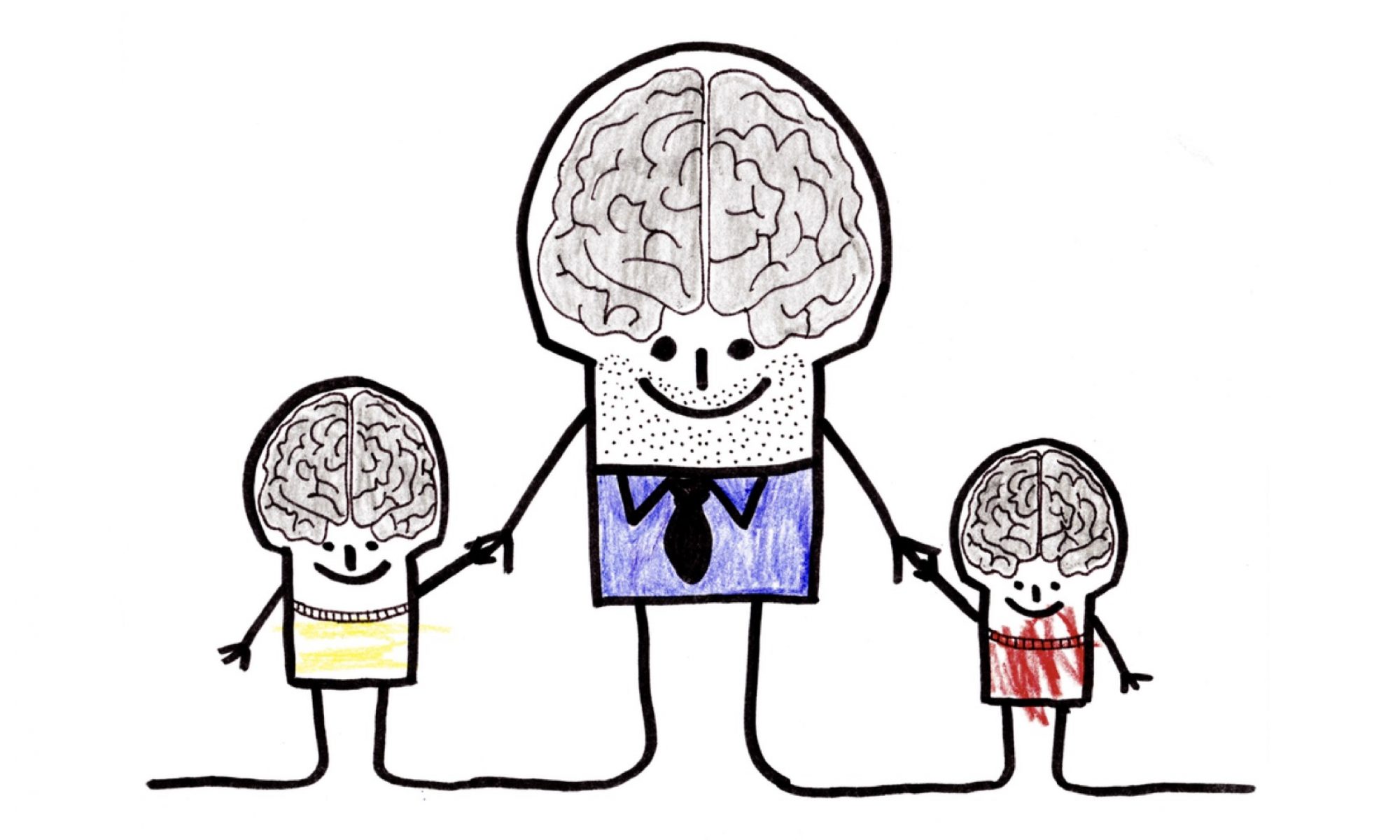

A Fresh Look at Goals: for Parents, Kids & the Family (Part 2)

In Part 1 of this series, I wrote about methods that help us define and develop goals.

Once you’ve clarified what they are, the next step is breaking each goal into down into manageable steps, so we can set out with a plan on how to accomplish them. This plan may need frequent adjusting. This is not only OK, but a healthy part of the process.

As we move along and things clarify, we sometimes find that part of a plan simply does not work. This is NOT to be considered failure, it is a mini-success because with the adjustment in our plan we align ourselves more closely with the end goal.

Ultimately, if we take steps on a daily basis (no matter how small) we can attain our goals. It’s important to remember that we may not reach our goals on the intended date. Some things are out of our control. And if you’re a parent, lack of time and energy are real obstacles that may hinder rapid accomplishment. Fear not, it’s still possible, as long as you become crystal clear about what you want and how you’re going to get it.

The good news is that if we do this ourselves, we wind up teaching our kids how to do it, too. It’s a winning situation for everybody.

Here’s snapshot of what my mentor, Zig Ziglar, says about the goals process. His fantastic book, See You At The Top, goes into great detail about this subject (see a full list of recommendations at the end of this article).

1)     Identify EXACTLY what I desire
2)     Spell out exactly why I’d like to reach these goals
3)     List the obstacles I need to overcome in order to get there
4)     Identify the people, groups and organizations I need to work with to get there
5)     Identify what I need to know (learn) in order to reach these goals
6)     Develop a plan of action
7)     Set a date on it. When do I expect to get there?

One additional thought. If this all seems overwhelming, that’s normal. You can’t possibly answer all of these questions all at once. If you’re just starting the process, you may not be able to answer any. But if you allow yourself to believe that you can do this, you will. If you believe that you can’t, you won’t. In other words, your perception will create your reality.

SPEAKING OF KIDS
It’s never too soon to help our kids learn to set their own goals. By this I do not mean us setting goals for them, that’s different (and also necessary).

For instance, my son Max is in kindergarten. I shouldn’t expect him to be able to answer the following: “So, what are your plans to get to college?”

But I can help him set some goals for the coming school year. Any extra-curricular activities he might want to partake in (ie: swimming or track and field…) I also like to discuss future goals with both him – from career to family plans. I do this with my 3-year old, too. It helps my boys develop their frontal lobe, which is so important in decision making and problem solving.

There are too many young adults that have not idea how to set a goal, or what to do with their lives.

OUR GOALS
I’d like to take a deeper look at the kindergarten to college analogy. ANYBODY who tried to look at this scenario as a point A to point B endeavor would be completely overwhelmed. Here’s a way it can be broken down:

Kindergarten (where I’m at) to College (the goal)
the step-by-step approach to accomplishing my goal:

– Section it off by grammar school, middle school, high school and college.
– Now break it down by grade (year): kindergarten, grade 1, etc.
– By semester
– By month
– By week
– By day
– By class

You get the idea. Each step leads us to the ultimate goal, but it’s much easier to build upon if you start from the “by class” goal. Now it’s manageable – a small enough bite that you can actually chew on it, instead of choke on it.

FAMILY GOALS
Family goals could be anything from spending more time together, taking a family vacation, helping each other get in shape, fixing up the house, etc…

Sometimes an individual’s goal becomes a family goal. For instance, my son Max wants to be a NASCAR driver.

This is his goal. But since he’s only 5, it’s my job (and my wife’s job) to help him attain it – making it a family goal.

My first step is bringing him to a kart race to gauge his interest level. Once he sees exactly what kids’ kart racing entails (this actually exists for kids his age), what does he think?

My responsibility is to help both boys set goals that are realistic and attainable (but not necessarily easy). I can’t expect Max to drive a full-sized car right now, but there are karts he can drive, or he can play a driving game on the Playstation, etc…

If we make goal setting a way of life for ourselves and our kids, we can all expect more fulfilling and less frustrating lives.

Is it easy? NO.

Have I accomplished everything? Hardly.

Is it worth it? Absolutely.

It’s a long road, but the sooner we get on the better off we’ll be.

And remember, you are not alone…

For further reading & listening:

Zig Ziglar
– See You at The Top (Highly reccomended book)
– Goals (audio CD’s)

Jack Canfield
The Success Principles
(also available on audio CD)

Brian Tracy

A Fresh Look at Goals: for Parents, Kids & the Family

Back to school doesn’t have to mean back to the same old daily grind.

This is true whether you’re a kid or an adult. Fall is the start of a new season, and with it comes opportunity.

You might be wondering – opportunity for what Daddy Brain? Raking up the leaves?

Nope. It’s an opportunity to take a fresh look at goals ­­– for ourselves, our kids and our family.

Gaining a clear picture of our goals is a huge step in attaining them. If we can “see them,” then we can move toward them. Think about it as if you were driving cross-country in your car. It’s the middle of the night. There are no street lights. No headlights. Not even a dashboard light (hey, this is starting to sound like a Meatloaf song).

Tough, right? How can we reach our destination, let alone see ten feet ahead of us, under these circumstances? I think you’ll agree it’s much easier to see with headlights. Now add a GPS and you’ve got both short term goals (headlights) working in tandem with long-term goals (the GPS), all focused on that final destination.

Very powerful.

It’s the same with goals. We can’t truly begin the journey until we can see where we’re going (which makes clearly defining our goals an important goal in and of itself). Depending on where you are in life, this could take some time.

According to Jack Canfield, “one of the easiest ways to begin clarifying what you truly want is to make a list of 30 things you want to do, 30 things you want to have, and 30 things you want to be before you die.”

Brian Tracy puts it this way:
“Imagine that 5-years from now your whole life has been made perfect in every respect. Every aspect of your life. All your dreams have been fulfilled; every goal has been achieved. What would it look like if 5-years from now your life was ideal in every way?

Where would you be in five years?

Who would you be with?

What would you be doing?

How well would you be doing it?

How much would you be earning?

What kind of home would you live in?

What would be your level of physical fitness?

What would your family be like and your relationships?

How would your children be doing?

If your life were perfect 5-years form now in every respect – what would it look like?”

He goes on to raise more questions before he mentions that the 5-years are going to pass. No matter what. “And if you’re crystal clear about what your life is going to be like in 5-years, your chances of making that a reality go up about 1,000%.”

In Part 2 of this series, we’ll examine what to do with these goals once we’ve defined them. How to take our goals, set a plan of action and attain them? We’ll also take a look at family goals &  how to teach goal setting & accomplishment to our kids.

And remember, you are not alone…

Related links:
A Fresh Look at Goals: for Parents, Kids and the Family, Part 2

For further reading & listening:
The Daddy Brain Book Guide (has many recommendations on the subject of goals)

Zig Ziglar
– See You at The Top (Highly reccomended book)
– Goals (audio CD’s)

Jack Canfield
The Success Principles
(also available on audio CD)

Brian Tracy

30 Days to Becoming a Better Parent

Picture 1My friend and fellow dad, Chris from Dad of Divas, is running a special free program for dads.

“I am embarking on an ambitious effort of providing some insights into parenthood and sage wisdom that has either been shared or that I have researched in regards to parenthood, and what it takes to be a great parent.”

This is a great opportunity for us to gain a better understanding of ourselves while making some improvements, too.

If you have a minute, click this link and join us.

And remember, you are not alone…

The Golden Rule: Treat Others As You Would Like To Be Treated

There’s something I needed to be reminded of today:

Treat others as you would like to be treated.

Simple? Yes. Easy to do? Not always. But the rule holds true whether we’re dealing with our spouse, our kids or our coworkers.

Sometimes it’s hard…
…like when we get caught up in trying to accomplish a short-term goal (a manager looking to “save” money by not giving a valued employee a raise), we sacrifice the long-term (his/her productivity goes down costing the company much more than the aforementioned raise).

Quite often it’s a matter of letting go of the need to control a child’s actions, a spouse’s health, keeping your company in the black, etc.

If we’re having the need for control, it’s easy to get frustrated when things don’t go exactly as we’d like. This often results in lashing out towards the very people we want to help the most. When this happens, we could be pushing that person (or situation) in the complete opposite direction of our desire.

But if we put ourselves in the other person’s shoes and try to get an understanding on THEIR POSITION, we just might be able to offer an empathetic ear and give them the support they really need instead of trying to control them.

Something Jack Canfield, speaker & co-author of the Chicken Soup for the Soul series, said has stuck with me:

“High intention, low attachment.”

I think this is great advice. But how do we have low attachment to someone’s health or our future? I think part of the answer is that “low attachment,” does not mean not caring. It’s more about letting go of anxiety and the need to control.

This is something I struggle with every day.

And remember, you are not alone…

Get Motivated by Successful Failures (Part 1)

Picture 1Some of America’s greatest success stories almost didn’t happen.

Did you know that Michael Jordan was cut from his high school basketball team? Following this rejection he went home, locked himself in his room and cried.

Walt Disney was fired from a newspaper for having no imagination and no original ideas.

Even The Beatles failed. Before they became “popular,” they were turned down by Decca Records who claimed, “we don’t like their sound, and guitar music is on the way out.”

One of Thomas Edison’s teachers told him he was “too stupid to learn anything, and that he should go into a field where he might succeed by virtue of his pleasant personality.”

What would have happened if these people would have listened to the criticism?

Whether the criticism spurred them to greatness or not, one thing is for sure: the deciding factor in their success was not their talent. It was their ability to get back on their feet – sometimes countless times and try again.

You can do the same.
How? By learning each lesson you need to learn from your “failures,” and trying again – as many times as it takes. Do the work that needs to be done, as best you can each day. No matter how daunting. Step-by-step, day-by-day, you will get closer to your goal until it is attained.

These successful failures are perfect examples that anything is possible.

Do you listen to the critics? Are you your OWN worst critic? If so, you may be denying the world your greatness. Not to mention your family, yourself and your bank account.

You do not have to settle for less than who you are. No matter what ANYBODY says.

If Jordan had settled for less, the Knicks might have actually won a title. Scotty Pippen would have had to score a LOT more points to create the Bulls legacy. And Dennis Rodman would have fallen into obscurity instead of becoming the greatest (and weirdest) rebounder in the league.

What if Edison would have listened? We might all still be sitting in the dark.

Whether you succeed or fail is up to you. It’s your responsibility. What do you choose?

Don’t forget, your kids are watching.

And remember, you are not alone…

Related Links:
Get Motivated by Successful Failures, Part 2

Family Blogs
blog

A Conversation of Biblical Proportions

Picture 1Join myself and Pastor Paul Peterson @ paulpetersonlive.com for our ongoing conversation about The Bible.

It’s an interesting combination of ignorance (mine) and expert-level knowledge (his) as I ask some pretty pointed questions.

Paul is a really good guy, as well as a dedicated family man and church leader. I highly recommend his blog!

And remember, you are not alone…

Do You Suffer from “Convenience Integrity?”

One Saturday morning, I was running errands with my son, Joss, when a strange thing happened.

I found integrity at Home Depot.

No, it wasn’t in one of the employees (who are surprisingly helpful at my local store), nor was it in the store itself.

On our quest for flowers for mommy and some water-softener, I found integrity in myself.

For those of you who aren’t familiar with water-softener salt, it’s something that helps keep your water softener cleaned out and working well so your water isn’t “hard.” Hard water is akin to taking a shower in liquid sandpaper – which is perfect if you’re trying to exfoliate.

When you buy the 40 lb. bag (geez!) of salt, you need to tell the cashier to ring it up, then load it into your cart on your way out (large piles of it sit conveniently by the exit). I asked for two bags, swiped my debit card, and got the salt.

When I got home I looked at the receipt. The cashier had not rung up the salt, which cost about $16.

I was faced with a decision. Nobody knew but me. I could have the salt free of charge. But just because nobody knew, didn’t make it right. Even though it was not intentional, and the huge corporation that is Home Depot would never miss my $16, it still felt wrong in my gut.

Then I realized, this situation had the potential to build up my integrity, or chip away at it.

Here’s the thing: (1) the nagging feeling in my gut wasn’t going to go away; (2) and not paying could cost me far more than $16, because it would have undermined how I felt about myself. Not a good recipe for success.

What kind of man was I?

I had to choose whether I was the guy who did the right thing, or the guy who ignored my integrity to save a few bucks. So I went back and paid for the salt (it did take me a few days to get back to the store).

This experience also gave me an opportunity to set a good example for my son, Max, who was with me this time. I explained to him what had happened and why I made the decision I made. This made the cost of those two 40 lb. bags worth their weight in gold.

But wait.
Before you start thinking I’m acting all high and mighty about this, I’ll admit there have been times where my integrity has wavered. And although it’s always over small stuff, I find myself wondering –
 how much integrity is enough?

Is burning an occasional CD from the library really “small stuff,” in the cosmic scheme of things? When compared to murder, stealing and infidelity, I’d have to say yes. Does that make it right, acceptable, or just plain rationalized? I think we all have a sliding scale of what seems like a breech of integrity and what does not. But where do we draw the line?

And remember you are not alone…

Superficial vs. Substance: the Swimming Analogy

Picture 2

It’s not how big a splash you make in life – it’s how well you swim, how strong you are and how many laps you can endure.

The splash is over in two seconds. Afterward, you either sink or swim…”

The good news is that we are not stuck with our current “swimming ability.” We can improve, as long as we’re willing to do the work.

And remember, you are not alone…

Two Sides to Every Story (or My Apology to Billy Crystal)

A driver who cuts you off on the highway. A cashier who crushes your eggs with an 8 lb. watermelon. The arrogant jerk who acts like he thinks he’s better than everybody else – or is just plain smarter. 

When I experience people like this my first instinct is often to think, say, or shout (if I’m in the car) something like, “moron!” OK, I admit, I’m keeping it clean. Sometimes I say far worse – quite emphatically!

But then I remember a very important message I was given:

“There’s always another side to understand. You may not necessarily agree with it. But know that side is there. Try to understand it, instead of judging.”

With such busy lives, not to mention coping with constant exhaustion, it’s sometimes easier to look at something (or someone) on a one-dimensional level.

A couple of years ago I noticed a guy I kind of knew walking around work looking extremely depressed. At first I didn’t look past his depression. But then one day I asked him if he was OK. It turned out he was in the middle of a divorce, and he was being granted very little time with his kids. He wasn’t just “some depressed guy,” he was tormented by the loss of his children.

Maybe the driver who cuts us off is rushing to the hospital. Or maybe they’re “venting” with aggressive driving because of stress over money, work, health issues or a failing relationship. It doesn’t make their driving acceptable, but it makes it comprehensible.

The arrogant jerk who acts like he thinks he’s better than everybody else may really feel totally insecure, inadequate or downright horrible about himself. So he/she compensates with arrogance.

These people might just be idiots – there’s that possibility. But I think it’s unlikely that anybody’s story begins or ends so simply.

This reminds me of a Billy Crystal story.

In 1996, I had just completed my first full-length screenplay. Honestly, it was awful, but at the time I didn’t know this. I was working in Manhattan at the corporate office of a major jeans company (in the customer service department), when I received an interesting phone call from a coworker.

Billy Crystal had just walked into our retail store (which was just downstairs). My heart raced. I opened my desk drawer which contained a pristine, polished copy of my awful script. I had a decision to make…

I took the elevator to the store and ran down the staircase toward street level. About halfway down I saw Billy. The poor guy was shopping with his wife and daughter. Still on the stairs I barked excitedly at him, “Hi Billy. I have this screenplay I’ve written, and I’d really appreciate if you could read it and tell me what you think!”

He looked mortified, but remained polite. He told me that he wasn’t allowed to accept any material unless it first passed through his agent (which is true). I think he even apologized before he walked away.

This guy had class. And at the time, I had none.

So what does this have to do with “two sides to every story?” Before I forced myself on the guy, I didn’t think about Billy’s point of view. He was trying to have a nice afternoon out with his family. He’s probably constantly bombarded (especially in 1996) by people asking for stuff and wanting stuff.

Yes, I had the guts to speak to a super star. But I was also disrespectful, not to mention the fact that I probably put a bad taste in his mouth about ever stepping foot in the store again.

Billy, you probably don’t remember me. You’ve probably let go of the incident long ago. But I would honestly like to apologize. I didn’t take your side into consideration, and I wound up being the rude person. And every time I watch Monsters, Inc. with my boys, I think about the lesson I learned that day.

And remember, you are not alone…

If you like this post, Stumble It!

Family Blogs
blog

The The 40-Year-Old Version: Book Review & Author Interview

Picture 2Here I sit, having freshly completed, The 40-Year-Old Version: Humoirs of a Divorced Dad. I’ve committed to writing a review, which is fine by me. The book is refreshingly good, and I enjoyed it immensely. But where do I start? How do I do it justice without sounding like dozens of other positive reviews of Joel’s work?

I think I’ll start from the same place Joel did. Honesty. I don’t mean honesty like, “hey, I stole your pen.” I mean honesty that comes from the soul. Honesty about feelings that men are not supposed to have, let alone share. But Joel is brave enough to do just that. 

Although many of the mini-chapters (which are really self-contained articles, perfect lengths for busy dads) are just plain funny, there’s a healthy dose of real issues that concern dads — both married and divorced. From the sad, defeated moment of moving back in with his parents (after the divorce), to using donuts & driving as a form of escapism, to rebuilding one’s life — Joel shows us (dads) that we are not as alone as we may have thought.

I also like the way Joel reminded me of the sacredness of even the most mundane-appearing moments with my kids. I could go on, but why? I’d rather let the author speak, or should I say type, for himself. I hope you enjoy the interview… 

Daddy Brain: Are you still seeing your kids just once a week? If so, how do you feel about this?

Joel Schwartzberg: I see the kids (my son, 9; and twin daughters, 6) every Friday night, and all day Saturday. I also take one of them out every Wednesday night for dinner or dessert so we can do some one-on-one bonding. Given my full-time work schedule, it’s as much exposure as I can logistically get, and I’m thankful for every moment. But I don’t measure my fatherhood by how much time I spend with them; I consider myself a full-time father. Fathers are fathers, period.

DB: How were you treated during the divorce process? Did you get any respect as a dad or a man?

JS: My ex and I chose to use a mediator, because there was mutual trust at first. I also didn’t want the kids to have to move out of their house, even if it meant giving more than what was required.

Since then, my ex has moved into another house with her boyfriend, but doesn’t seem to realize that changes the game a bit. So, unfortunately, we’re talking to lawyers now about, to put it diplomatically, equalizing the situation.

It helps that I now feel equally qualified as a parent. Early in the divorce, I felt like the lesser parent. I think many dads – divorced or not – probably fall into that trap, but in truth our dadhood is ours to define. It’s up to us to take responsibility and discover what I call our “inner dads”.

DB: I have divorced dad friends that struggle with balancing their new (intimate) relationship with their relationship with the kids. They’re haunted by fear of commitment; fear of another failed relationship; difficulty integrating their kids into the mix; the need for friendship & intimacy vs. the fact that their girlfriend might not be the right match for a man with kids. How was this transition for you?

JS: Well, fortunately, I wasn’t burdened by any of those anxieties and fears. My kids love people who love them back, so I had no real concerns about their new stepmom, who has the double benefit of being a 5th grade teacher and a terrific cook.

As far as me, my last marriage showed me the dynamic that doesn’t work for me, making it easier for me to recognize the one that does. Yes, there’s a balancing act between my life as a husband and my life as a father to these kids, but my wife is patient and understanding (and I reward her as often as I can). Finding someone who would accept me and my three little carry-ons was not hard, but I consider myself very lucky in that regard.

DB: In your book you have an article called, “Parenting by Numbers.” Something you wrote hit me hard. “This is the year it will sink in… This is the year they’ll start to think of me as a terrible, angry father.” Raising my voice. Losing my patience. Being snippy, short and gruff. There are all things I battle with on a daily basis. And quite frankly, even if it only makes up 2% of my time with my boys, I feel like an awful father. What do you do to avoid these negative moments? How has your progress been?

JS: Those moments seemed to subside with the emerging definition of my own role in my kids’ life. When I was defining my fatherhood based on my ex-wife’s expectations, it frustrated me to no end, and I’m sure I transferred that resentment to the kids. But now I remind myself that I’m their dad – their only father — and I have control over this situation. It also helps to put myself in their shoes; I can appreciate a lot of their hurt and vulnerability that way.

I think we need to cut ourselves some slack too. All parents are handicapped in one way or another. We all screw up. But kids at this age are incredibly resilient, so the point is how we move past it. 

I talk to my kids about my anger, and sometimes apologize for it if I feel I’ve crossed a line. This seems to make everyone feel better. Some have called that weak parenting, but I want my kids to be comfortable expressing their deep emotions, and as their parent I need to model that behavior.

DB: What advice do you have for divorced dads, or dads that are in the process of getting divorced?

JS: To remember they are not divorcing their kids; just their ex. To see the divorce as an opportunity to reconnect to their children on their own terms and, in doing so, become a more genuine – and happy — dad. And to understand that they are their children’s permanent, irreplaceable, full-time Dad, no matter what. Nothing can change that.

DB: Finally, will there be a sequel to your book? Or are you going to be like Billy Joel and just ride on the success of your previous work, never to grace us with anything new again? What’s his deal anyway?

JS: That’s probably what his last wife is saying.

As for me, I’m going to see how far this book goes. It was optioned by an L.A. producer. Let me say that again: IT WAS OPTIONED BY AN L.A. PRODUCER. So when that dream gets inevitably crushed, I’ll decide what to do next. I do have a day job, you know.

– – – – 

I’d like to thank Joel for taking the time to answer my questions. If you’d like to learn more about his book, or contact him, please visit: his Web site.

And remember, you are not alone…