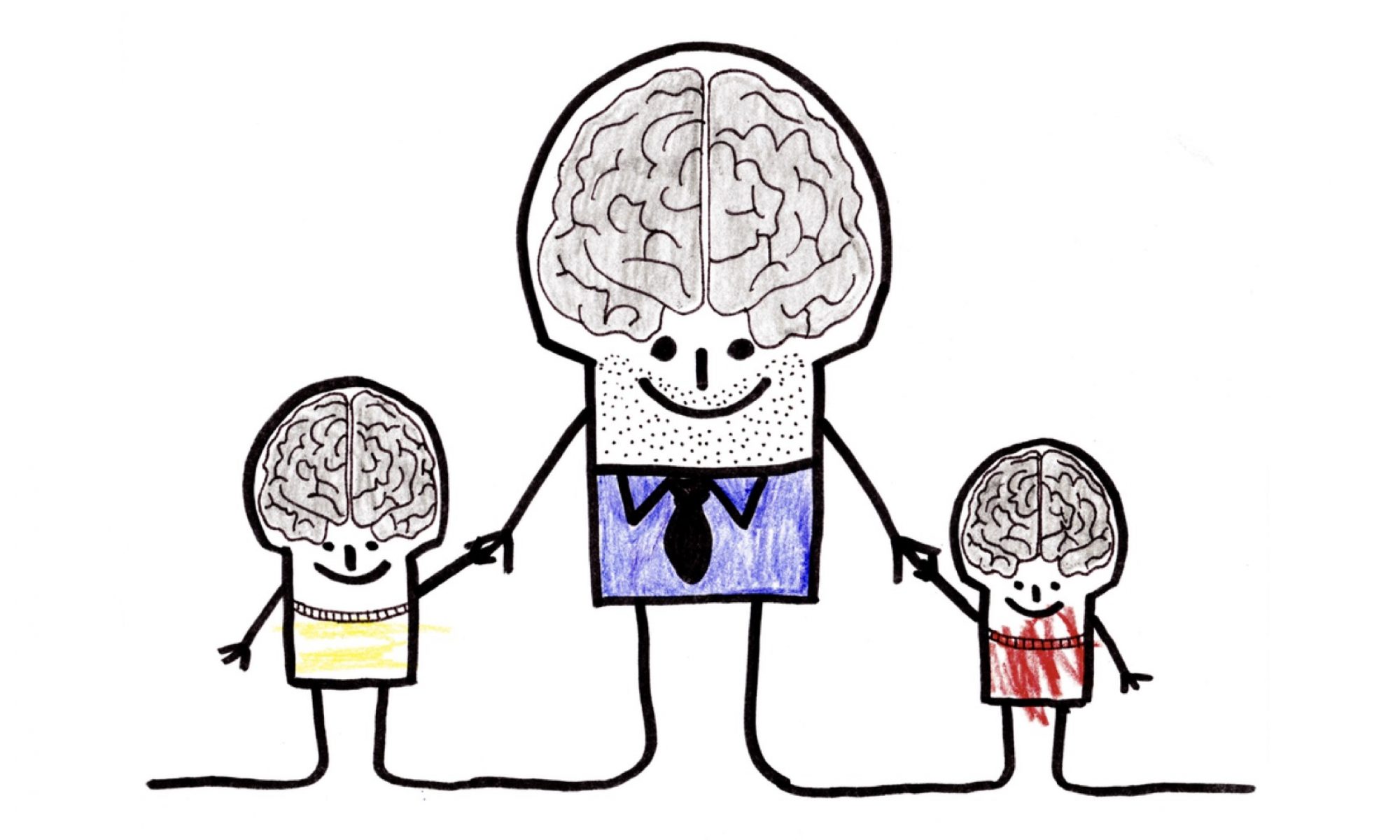
Join Daddy Brain on ABC News!

Daddy Brain was highlighted
on the evening news.

WHERE
The ABC News Affiliate (WKOW / Channel 7) in Madison, WI

WHEN
– The air date was Thursday, April 9th @ 6 pm Central Time. If you missed it, just go to WKOW’s Web site to watch the video (enter key words “Daddy Brain” in the search box). 

Many thanks to Kim Sveum, Carol & Roland Beres, my wife & kids, and Phil the cinematographer for helping this manifest into reality.

And remember, you are not alone…

Equal Rights for Kids: DON’T HIT! Part 2

picture-6Unfortunately, the number listed above is not my current salary. It’s an alarming statistic, tallying the number of students spanked or paddled by teachers during the 2006-2007 school year — according to the Department of Education.

Did you know that in 21 states corporal punishment is legal in public schools? In other words, it is LEGAL for a teacher, principal, or guidance counselor to spank someone’s child if they misbehave in school.

Here’s my question: would it be wrong if your coworker were treated this way? How about your wife or husband? What  if you were given a spanking when you missed a deadline? Would that be OK? If your answer is no, then why in the world is it considered “OK” to do to a child? Quite simply, IT’S NOT.

Research has proven that there are many negative side effects associated with spanking, swatting & paddling. As a mater of fact, it has the capacity to cause long-term brain damage! This is true whether it occurs in school, or in the home. No matter how you slice it, it’s bad news for kids. More on the research I’m speaking of in a moment.

First I’d like to explore some common beliefs about hitting children.

Zig Ziglar, in his fantastic book, See You at the Top, wrote the following about spanking and discipline:

“I am certain that many civil libertarians will scream it’s archaic to lay your hands on kids. Psychologists generally agree that when a child understands he is going to be held responsible for his deeds, he is far more likely to be concerned with those deeds…” 

“…Psychologist James Dobson strongly feels it is most destructive to permit a child to go through life without the loving assurance expressed in discipline. Discipline assures the child he is worthwhile and that you love him enough to discipline him for conduct which is not in his own best interest.”

I whole-heartedly agree that children, like adults, need to be held responsible for their actions. It’s true that we can not let them act and speak however they want, like wild animals.

What I do not agree with is the use of physical force as discipline.
(this is one of very few issues Zig and I are in disagreement on.) 

“Discipline,” is not a one-dimensional word. As a matter of fact, if we utilize positive forms of discipline (punishment/consequences), we instill discipline (self control & determination) in our children — as well as virtue, morality, manners and responsibility and self respect.

Our children do not need to learn fear and repression, they need to learn integrity and positive expression.

We don’t want to beat them down, we want to build them up — all the while making sure they have a solid foundation to build their own future on.

Mark Brady, PhD., has written many books about parenting. He also specializes in the
brain development of children. In his book, A Little Book of Parenting Skills, Mark explains:

“A parent’s role fulfills a sacred trust: one intended to safely help grow the heart, mind, brain and body of a vulnerable human being. No matter what you think, or what your own parents did that made you ‘turn out alright,’ hitting children violates that sacred trust.

Modern brain imaging studies clearly show that hitting children disrupts and disorganizes the developing structures of the body and brain. The home that used to be a safe refuge, no longer is. The people who used to be the ones a child could turn to for safety, no longer are. With nowhere safe to go, and no one available to turn to for soothing and help in regulating emotional distress, the world becomes an overwhelming, confusing, unmanageable place.”

In An Interview With Mark Brady, Part 3, Mark had this to say:

“Research suggests that parents who hit children were themselves hit by their parents. From their perspective, they were hit and ‘they turned out all right.’ My response to this assertion is: ‘Compared to what?’  How might you have turned out had your fear circuits not been intermittently triggered in ways that make the world look like a dangerous and difficult place?”

In Part 3 of this series I’ll touch upon how religion plays into the discipline paradigm. I’ll also share more of Mark Brady’s findings, as well as some healthy discipline alternatives.

Until then, don’t hit!

And remember, you are not alone…

Related Links:
Never Hit a Child
Equal Rights for Kids: Don’t Hit (Part 1)
Equal Rights for Kids: Let Your Kids Decide
Why Spanking Children is a Bad Ideaby Mark Brady 

Resources for Divorced Dads

Need help dad? Whether you’re contemplating a divorce, are in the middle of one, or are simply dissatisfied with the court’s decision regarding custody of your kids, there is help. And no matter what the situation, even though it might not seem like it right now, there is hope. Your kids are depending on you to do your part to improve the situation. I hope these resources prove useful: 

Nationwide Programs:

Dads Divorce
Essential information & resources for men at any stage of divorce.

Father’s Help Hotline
A Powerful new fathers’ rights protection system.

Fathers for Justice
“Anyone who supports equality in family courts is welcome in our organization. We believe that children of divorce or separation deserve the right to be raised equally by BOTH parents.”

Child Support Savings

Find the Children
A national nonprofit organization dedicated to the prevention, location, and recovery of missing and abducted children.

Local Wisconsin Programs:

Even if you’re not local to Wisconsin, these groups may still be able to help you. And if they can’t, there’s a good chance they can direct you to a group closer to home.

Family Resource Center of Madison, WI
A directory of contacts. 

Partners in Parenting Resource Center – Madison
810 W. Badger Road, Madison, WI 53713
(608) 251-0355

The top 5 legal things for practitioners to know when working with unmarried fathers (good for unmarried fathers to know, too)

If anybody knows of other helpful links, please let me know.

And remember, you are not alone…

Dads are Not Second-class Parents, Part 5: Perception & Paradigms

This installment of the Dads are Not Second-class Parents series came about in an interesting way. Back in July of 2008, I spoke about this topic on At Issue With Ben Merens, on Wisconsin Public Radio. Soon after, I received a call from the Children’s Service Society of Wisconsin, a state run program. I was asked to be a guest speaker at one of their conferences, and this article is the result.

I recently had the honor of speaking with professionals that are dedicated to helping dads (both in-home and in various programs throughout the state) become better, more involved parents. After all was said and done, I realized this would make a good blog post…

Today I’ll be focusing on how dads are often perceived, drawing concepts from my article, ‘Dads are Not Second Class Parents.’

The question I have for you today is this:

How do we show fathers that they don’t have to be carbon copies of their fathers & grandfathers? How do we turn fathers into involved DADS who ARE ABLE to change a diaper, feed their children, care for them and nurture them. That they are able to teach their kids their numbers, letters, virtues, morality and integrity. Show them compassion.

This is not to say that moms are less capable to do these things — this is just to say that WE are as capable as moms to do them.

We are not a stereotype. Working men whose duty it is to make the money, deposit the checks and the sperm. WE ARE PARENTS. We are modern day dads.

I have been told by a close family member, something that troubled me very much. Let me tell you a little story…

There was a time where I worked from home as a freelance writer. For the first year and a half of my oldest son’s life. I was able to make my own schedule, and spend a lot of time with my son. Day in and day out, I fully shared the parenting with my wife. And I was making good money.

One day, at a birthday party for a cousin, I was speaking about raising my son. I can’t remember exactly what I was speaking about. But what I do remember is being told, “you know Joe, it’s not your job to raise this child. It’s your job to make the money and provide financially. It’s your wife’s job to raise this child.” It was also mentioned that I should be going to an office like everybody else to earn a living, not working from home.

Needless to say, I was VERY, VERY upset by this comment.

Now imagine hearing “you shouldn’t be raising your child,” from family and the community. You turn on the TV and dads, if they’re even around, are bumbling idiots or sitting in the background pouring themselves a cup of coffee – while mom makes the dinner, works a full-time job, changes the diapers, cleans the house and discovers a cure for blindness — all at the same time!

Not only does this insult dads, the ones who actually DO all these things themselves, but it also sets a very low standard for fathers who do not. It perpetuates a problem where everybody loses.

What I’m saying is, when this kind of perception or paradigm BLEEDS in from TV, magazines, society, family — the message is pretty clear. I am lucky enough that my wife has always been supportive and agrees that we should be parenting together. But what about the dad who does not have this type of wife? Who’s surrounded and pressured by old-school thinking?

What else is HE supposed to believe? How can he know any better?

I’m from NY, I’ve been raised in a progressive environment. What about someone who comes from a small town, where these progressive thoughts do not exist? Or the dad who doesn’t know he has choices, because he’s never been introduced to them? How are they supposed to know they have a choice when they’re being told:
MAKE THE MONEY, THAT’S YOUR JOB.

It’s all about perception. How dads are perceived vs. who they really are. Sometimes the perception of a dad — even just calling him a father vs. a dad (there’s a difference) — sometimes this perception causes him to feel isolated AS IF he’s on an island, as if he has no support, because he can’t find any! There are no magazines geared towards dads, no acceptable venue for us to speak about what’s on our minds, what we’re struggling with.

Could you imaging the reaction a dad might receive if he walked into work and told his coworkers that he cried on the car ride in because he missed his kids? What would you think of a man that said this? Would you judge him, or respect him?

It’s the same with women who were prejudiced against for years and years. They weren’t allowed to vote, then they could vote. It was very difficult to become an executive, now their presence as an executive is much more prevalent. Now, although the battle is not over, there is much more equality. But it has taken decades in order for women to reach a point where they can feel somewhat respected and treated equally to men.

Do you think for a moment that women were not capable of voting? Or making executive decisions? Of course they were capable. But they needed a movement to overcome the obstacles laid before them.

Now is the time for an equal rights movement for dads.

This is the main reason I started blogging. It’s why Daddy Brain exists. To help build a community for dads who don’t have one. To let them know that it’s OK to be feeling whatever it is they are feeling. That they are not alone.

You too can do this, if you haven’t already started.

Before we can help dad, first we need to understand him, and what he THINKS his role is. If we can connect with him, the input he receives from us could very well change his life. I’d like to turn this conversation over to you, to discuss what your major problems are in doing this. And what you have found that works well to engage dad and help him take his place as a true parent.

And remember, you are not alone…

Additional Dads are Not Second-class Parents Articles:
– Part 1
Part 2: And Then There’s Dad
Part 3: A Divorced Dad’s Perspective
Part 4: Dads Need Help Too
A Question for Dads: Have You Been Treated Like a Second-class Parent?

Where’s the Dad in Toy Story?

Family Blogs
blog

The Daddy Brain Radio Show

Click here to listen to the inaugural episode of The Daddy Brain Radio Show!

The show aired live on Monday, March 16th @ 7 pm, Central Time, on WORT Radio (89.9 FM). The topic of the show was: Dads are Not Second-class Parents.

I took calls, live on the air, from dads just like you about issues that relate to modern day dads. I even had a surprise in-studio guest who spoke about raising his son and a rare positive divorce experience (in the courts & with his ex).

Although there were a few kinks, like not mentioning the station’s phone number enough, the show went well and I learned a lot. I’m also grateful to WORT for providing me with the opportunity.

Click the link above and listen to the archived show from anywhere in the world on your computer with streaming audio.

And remember, you are not alone…

The Daddy Brain Dads’ Group

Are you a dad local to the Madison, Wisconsin, area? If so, you’re welcome to join the Daddy Brain Dads’ Group.

It’s a place for modern-day dads to talk about what’s on our minds, in our hearts and what we struggle with as parents. Whether you’re a working dad, a stay-at-home-dad, or somewhere in-between — this is your chance to be heard.

Join our monthly meetings the third Wednesday of every month,  from 7:30-8:45 pm @ The Madison Public Library, Sequoya Branch, 4340 Tokay Blvd, Madison, WI.

Upcoming meeting date:
– Meetings are scheduled to resume in Late Summer/Fall. Check back soon for more details.

To reserve your seat, or for more info, contact Joey at daddybrain@live.com

or 608-216-6760.

And remember, you are not alone…

Multi-channel Daddy Brain Events in March

March is shaping up to be a very positive month for Daddy Brain, with three modern-day-dad events!

If you’re a dad please feel free to join me — in person or on the radio waves. And please spread the word…

March 12, 2009
Fulfilling the Promise Conference: supporting and educating parents
3 pm, Kalahari Resorts, Wisconsin Dells, WI
No Father is an Island Workshop. I will be speaking with professionals who work directly with dads and families. Topics include issues I wrote about in Dads are Not Second-class Parents, and how they relate to dads in different family, professional and economic situations. This was also a topic I discussed on At Issue With Ben Merens, on Wisconsin Public Radio. Click here for access to all three shows that Daddy Brain appeared on.

March 16, 2009
The Daddy Brain Radio Show
7 pm, Central Time, WORT Radio
I’ll be taking calls on the air about issues relating to modern day dads. Feel free to call in! You can listen to this show on your computer with live streaming audio by adding it to your iTunes, Windows Media Player, VLC or Winamp. Just 
click here and download the station to the format of your choice. If you’re local to Wisconsin you can also listen on 89.9 FM. 

March 19, 2009
The Daddy Brain Dads’ Group
7:30 pm, The Madison Public Library, Sequoya Branch, Madison, WI
A place for modern-day dads to talk about what’s on our minds, in our hearts and what we struggle with as parents. Whether you’re a working dad, a stay-at-home-dad, or somewhere in-between this is your chance to be heard.

Join our monthly meetings the third Thursday of every month @ The Madison Public Library, Sequoya Branch, 4340 Tokay Blvd, Madison, WI. Our first meeting will be Thursday, March 19th from 7:30-8:45 pm. To reserve your seat, or for more info, contact Joey at joeyguido@juno.com.

And remember, you are not alone…

Do Your Kids Know What Goals Are?

Do your kids know what a goal is? Or do they think it’s what occurs when somebody scores in soccer?

Recently, I’ve been listening to a motivational/inspirational speaker named Zig Ziglar. Zig has an amazing audio book called Goals, which I highly recommend.

Listening to the CD’s, I got to thinking about my boys. Have I been teaching them about goals?

For some reason, probably because they’re both so bright, I assumed they already knew what a goal was.

When I asked them about it and got the, “it’s when somebody scores in soccer dad” response, I realized that I had not been teaching them — at least not in a direct way. We work on goals all the time, but I had never given them the language to understand what it was we were doing.

They needed a kid-friendly definition of the word and the concept. And they needed it now so that goal setting (and attainment) could become a core value and a way of life.

Although I’ve been “setting goals” for many years, until recently I have not written them down or defined them clearly  so they were always in a cloudy, “gaseous” state. Since they were not clearly defined, I didn’t have a tangible idea of how I would attain them, which made it impossible to fully commit to them. I just figured they’d manifest eventually if I did a little something for them here and there.

In other words, I didn’t really know how to set a goal. I was never taught.

Without a plan with realistic steps in it, I found that my “a little here and there,” was nowhere to be found. Without a clear intention there is no real goal to work towards. Just a lofty idea. As Zig would say, I was a “wandering generality,” and I needed to become a “meaningful specific.” He goes on to mention that even Howard Hill, the greatest archer in the world could not hit a bulls-eye while blindfolded. “How on earth could anybody hit a target they couldn’t see? …How can you hit a target (goal) you do not have?”

So, what’s the best way to teach these values to our children? Live them ourselves.

I do my best to start each day by asking myself: “what great thing am I going to do today?” This puts me in a good frame of mind to be proactive.

I’ve also started asking myself the following:

– Do I have milestone goals for my kids? To teach them how to ride a bike, be able to read or understand an appropriate level of spirituality by a certain age?

– Do I help my kids set “high-reaching” goals, teaching them to reach high for themselves in the process?

– Am I helping my kids set their own goals, and giving them the space to attain them? Am I supporting them (when necessary) through the process so they can come out of it having completed the goal — developing the values of integrity and perseverance?

I want to make sure that my boys know even if it’s hard, in this family we don’t give up. If this is important to you, you can get it done. I believe in you.

And remember, you are not alone…

Dealing with Terrible Tantrums

Recently my 2 1/2 year old son, Joss, went through a 10-day marathon of uber-tantrums.

Night and day, out of the blue tantrums terrorized us all. The worst were in the middle of the night, where I feel most unprepared to cope with a screaming child. Here is this little person throwing everything out of his bed — while kicking, flailing, screaming his head off.

I’m sorry, but having the ass of beanbag duckie hit me in the face — no matter how plush it might be — triggers my own anger and frustration, making me ready for a tantrum of my own. Not a good place to be (for either of us).

There are hundreds of articles about this subject online, including 121 on FamilyEducation.com’s Tantrum page. So I’ll spare you a rehashing of the same old stuff. Since my son has not taken to throwing refrigerators (yet), I’m sure the sound advice on a trusted Web link will suffice.

Instead, I’d like to take the discussion to another level and question the very essence of a tantrum, and our role in them…

FamilyEducation.com’s article Taming Toddler Tantrums, raises some good points that I’d like to use as a springboard:

1) “Parents of toddlers need to keep one thing in mind when their child begins to have a tantrum: Your child can not help it
2)
“When her [your child’s] frustration builds to a certain level, your toddler literally loses control.”
3) “If it’s frightening for you to see your toddler possessed by the demon of tantrum, think how she must feel.”

After reading this article I was reminded that my little boy is depending on me to set an example by keeping control of myself — but more importantly to take care of him.

There have been times where I’ve let him down. My results have been inconsistent — sometimes reacting with compassion and patience, other times losing my temper, being gruff and yelling (learn more about the adverse affects of yelling at kids here).

My worst moments happen when I’m tired and overwhelmed, which sounds a lot like how Joss is probably feeling when he’s having his worst moments. If I’m having trouble (and I’m a somewhat mature 40 year old), how hard must it be for him?

Simply put, it does not matter how tired I am, how stressed, etc. I’m supposed to be a grown up. This is my son’s life on the line! These are defining moments that will either help or hinder him for decades to come. This is serious stuff! Yes, kids are resilient. But they’re also sponges, delicate and in need of the tools required for a healthy life.

This is not “oh you’re doing your best, don’t beat yourself up” stuff. This is “you better get your shit together, or you might rob your son of his potential.”

Some may say that I am being too hard on myself, that I should give myself a break. I say that without a constant desire, coupled with taking the necessary actions to improve — how is that my best? My goal is to keep both of my sons’ potential intact, AND help it grow. If the mechanic fixed your car and then it blew up as you drove away, would he be told, “it’s OK, you did your best…” I don’t think so.

Sometimes our best sucks.

And that’s OK as long as we’re willing to do something about it and take responsibility for ourselves.

Switching gears (no car analogy intended):
The more I think about point #1 listed above: “Parents of toddlers need to keep one thing in mind when their child begins to have a tantrum: Your child can not help it,” the more I wonder if it’s completely true that the toddler can not help it. Because sometimes when Joss has a tantrum, I offer a consequence (like taking away a toy, or “no cookie for dessert unless you stop”) — and he stops. Within 5 seconds, he’s done. He can be reasoned with — sometimes.

Is there a tantrum threshold? A point of no return where reason is just too UN-reasonable for my little boy? If so, what am I missing? Because I can’t seem to tell the difference between the tantrum that can be reasoned with vs. the tantrum that has no chance of being reasoned with.

It could be that my limbic system (in the brain) is being “held hostage” by what it is interpreting as beratement, verbal violence, or something to that nature. Come to think of it, beanbag duckies’ ass hitting my face does feel like physical abuse. I find it very hard to detach myself emotionally from the tantrum. It’s like turning a 100-watt stereo up to full power and standing 6″ away from your premium subwoofer. As the beat rattles your bones and prepares to shatter your eardrums, how can one be expected to say, “dude that’s just really loud. It’s OK though, I won’t let it bother me…”

(NOTE: Joss’ tantrums coincided with a cold he was suffering from. Since he’s feeling better and getting more sleep, they’ve subsided — thank the Universe. The correlation is clear between the cold and the tantrums, and that’s something to keep in mind for the future.)

And remember, you are not alone…

Family Blogs
blog

Sex and the Daddy, Part 2

In Part 1 of this series, Tyler from Building Camelot kicked off a discussion about relationships and the importance of sexual fulfillment (that men crave) vs. emotional fulfillment (that women crave).

Tyler is a brave man to write about this. I have been wanting to touch upon this topic for months, but have been avoiding it. Alas, now there’s no turning back…

As Tyler points out, “if you both make it a priority and work on fulfilling each others needs at the same time, mutual fulfillment can be achieved. If you value your marriage, neither you nor your spouse can afford to sit around and wait to have your needs met.”

I totally agree. It’s not a question of whose needs should be satisfied first. And the problem isn’t necessarily a lack of desire to satisfy our partners.

The problem, at least for me, is not having the energy to do it.

Do I want to be more supportive? YES. But by the time we’re able to talk, after the kids are in bed, my wife is half in bed herself (to sleep unfortunately), and my brain is mush (hence the title of this blog).

Does my wife want to make love with me more? YES. But the truth is she’s exhausted and currently suffering from diabetes, migraines and a knee problem. My incessant talking about the subject doesn’t help much. Just call me Mr. Romance Killer (but hey, it’s not my fault she’s so cute).

To compound things, most of us husbands find sex to be a stress relief (I know I do). The more stressed I am, the less I’m able to be compassionate. The less I’m compassionate, the less likely my wife is going to feel fulfilled  (hence less sex).

The more stressed I feel, the more I seem to obsess on sexual thoughts (bare with me readers, I’m bearing my soul here).

I have trouble differentiating my need for sex with my need to be nurtured. I think that men and women are wired differently, and the male ability to admit to emotional needs is overshadowed by our need for a nice piece of ass.  But really, it’s the same thing we want, there’s just different ways of getting there.

And I wonder how much of that difference is imposed on us by society.

I’m from NY, where every street corner used to have a little candy stand with rows magazines depicting half-naked women on them. What is that saying to young boys AND to young girls? What have we been taught?

But underneath the top layer, it’s not really about sex. The predominance of sexual thoughts and feelings are merely a coping mechanism. It’s a way to distract myself from what’s really on my mind, like:

My wife’s health. She’s got diabetes and she struggles with her weight. I’m afraid of losing her.

I miss my kids all day, 5 days a week. I shouldn’t complain, I get to go home to them every night. But I miss them, and I’m missing out on their lives. They’re only going to be this age once. Sometimes I feel like a bystander.

I get so aggravated with myself about these thoughts, which expends energy. I’m walking around thinking about sex. I’m not being true to myself, I’m not taking a moment to center myself in a meditative moment. I’m harping on something that merely frustrates me even more!

I am dedicated to my wife and my boys. It’s one thing to fantasize, but having sex with anybody other than my wife would go against everything I stand for as a man, a husband and a father. When dads cheat, they don’t just cheat on their wives, they’re cheating on the whole family – and in doing so the foundation of the family is shattered.

Now don’t get me wrong, I’m not saying my wife and I are never intimate. For a couple with two kids, we somehow occasionally find the energy. Of course, then we pass out immediately, unless of course one of the kid’s SEX RADAR goes off. That’s always fun.

Has this happened to you? It’s 2 am. You’re both awake. Somehow, someway you both feel inclined to be intimate. It’s wonderful! Until one of the kiddies waltzes into the pitch black room (thank God it’s dark) and wants you to refill his Sigg bottle or wipe his butt after he poops!

Aggggggggggggggggggg! 

Geeze dude, couldn’t you wait like 20 more minutes to poop?

The question is, where did this thought process come from? When & why has this become a coping mechanism for me? And such a strong one?

And does it really matter? If I’m not acting on it, is it so bad? Well, if it’s causing me emotional pain then yes.

And remember, you are not alone…

Family Blogs
blog